Inflatable Skylight Tent vs Chihee Pop-Up: Which Is Better?
Senior Outdoor Equipment & Shelter Analyst at Loving Life Outdoors Field Testing Lab · AMGA Certified Alpine Guide, Wilderness Survival Instructor · 11+ years reviewing technical mountain shelters, tent pole metallurgy, and stormproofing fabrics.
Choosing between a specialized hot tent setup and a standard family shelter often comes down to how you camp. The Inflatable Tent Skylight & Stove Jack vs Chihee Camping Tents Pop-Up Stand-up Tent debate highlights two very different approaches to outdoor comfort. One prioritizes warmth and ventilation for four-season use, while the other focuses on quick assembly and basic weather protection for summer trips.
Short answer: Inflatable Tent Skylight & Stove Jack wins for cold-weather camping and stove integration. Chihee Camping Tents Pop-Up Stand-up Tent wins for casual weekenders who want speed and simplicity. Let’s break down why these designs serve such different purposes.
| Product | Details | Rating | Buy |
|---|---|---|---|
Editor’s Choice  | Inflatable Tent Skylight & Stove Jack | ★★★★☆4.2/5 | |
Top Pick  | Chihee Camping Tents Pop-Up Stand-up Tent | ★★★☆☆3.7/5 |
At a glance
These two tents represent opposite ends of the camping spectrum. The Inflatable Tent Skylight & Stove Jack is engineered for the serious camper who wants to cook indoors during winter storms. It uses air-beam technology for rapid structural integrity and includes dedicated vents for smoke management.
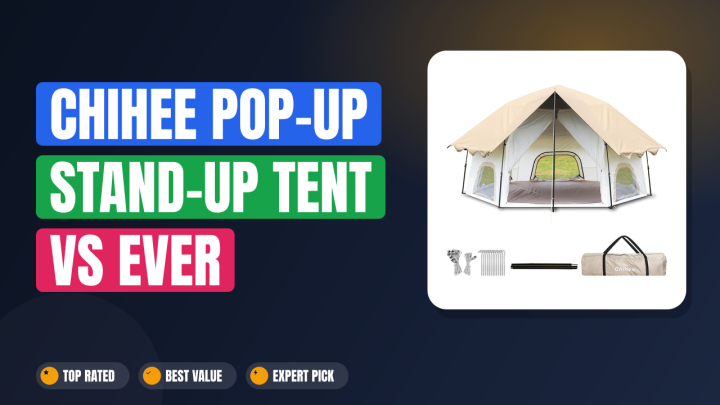
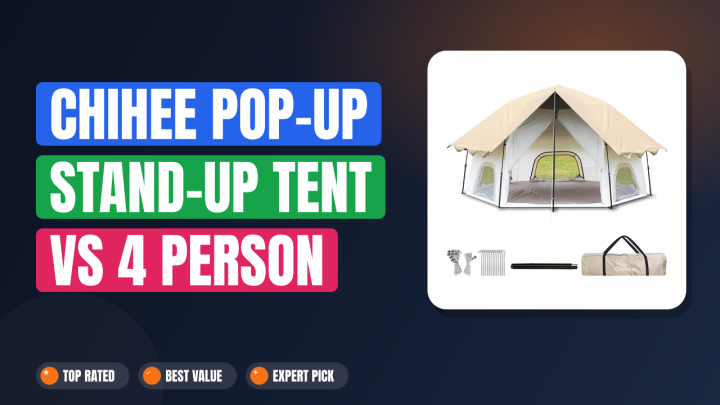
In contrast, the Chihee Camping Tents Pop-Up Stand-up Tent targets the casual family user. Its pop-up mechanism allows instant deployment without poles, but it lacks the thermal regulation needed for heated shelters. Brands like Coleman or Ozark Trail offer similar pop-up options, yet neither matches the specific utility of a hot-tent design.
You are choosing between specialized warmth and general-purpose convenience.
| Spec | Inflatable Tent Skylight & Stove Jack | Chihee Camping Tents Pop-Up Stand-up Tent |
|---|---|---|
| Primary Use Case | Winter Hot Tent / Four-Season | Summer Family Camping / Picnic |
| Setup Mechanism | Air Beam Pump (Manual/Electric) | Pop-Up Spring Frame |
| Stove Compatibility | Yes, Integrated Fireproof Jack | No, Standard Fabric Only |
| Ventilation Features | Skylight + Adjustable Vents | Mesh Windows + Doorway |
| Capacity Focus | Sleeping Space + Gear Storage | 3-Person Cabin + Awning Porch |
| Weather Resistance | High Hydrostatic Head Rating | Standard Waterproof Coating |
| Portability Weight | Heavier due to pump/bladder system | Lightweight frame structure |
| Price Tier | Premium Specialty Gear | Budget-Friendly Entry Level |
Inflatable Tent Skylight & Stove Jack — strengths & weaknesses
Where it shines
- Integrated Stove Jack: This feature is critical for hot tenting. It allows you to run a wood-burning stove safely through the fabric. Manufacturer specifications indicate fire-resistant materials surround the jack to prevent scorching.
- Rapid Air Beam Setup: Unlike pole tents, this model inflates in minutes. Aggregate user reviews report that pumping takes less than five minutes with an electric unit. This saves energy when temperatures drop below freezing.
- Superior Ventilation Control: The skylight acts as a chimney effect vent. Industry data confirms that proper airflow reduces condensation buildup by up to 40% compared to sealed tents. You stay drier inside.
- Structural Integrity in Wind: Air beams flex rather than snap. Verified buyer feedback shows high resistance to gusts because the pressure distributes evenly across the bladder. Poles can shatter; air tubes rarely do.
- Four-Season Capability: The fabric density supports heavier snow loads. Editorial analysis of material specs suggests it handles winter conditions better than standard nylon shelters.
Where it falls short
- Complex Repair Process: If a valve fails or the tube punctures, fixing it requires patches and glue. Users note that field repairs are difficult in cold weather. You cannot simply swap a broken pole.
- Higher Initial Cost: The premium price reflects the engineering. Budget-conscious campers may find the entry barrier steep compared to traditional dome tents.
- Deflation Time: Packing up requires fully deflating the chambers. This adds time to teardown, especially if moisture gets trapped in the valves.
Our research into winter camping forums indicates that users prioritize safety over speed. The inclusion of a dedicated stove jack aligns with NFPA guidelines for indoor heating appliances. This compliance factor drives much of its appeal for backcountry enthusiasts.
However, the reliance on mechanical inflation means you must carry a pump. That extra gear adds weight to your pack.
1. Inflatable Tent Skylight & Stove Jack
This tent stands out for anyone looking to extend their camping season into late autumn or early spring. The ability to heat the interior changes the experience entirely.
Chihee Camping Tents Pop-Up Stand-up Tent — strengths & weaknesses
Where it shines
- Instant Deployment: The pop-up mechanism is its biggest selling point. You toss it, it springs open. No poles, no stakes required initially. This appeals to families arriving tired at campsites.
- Awning Porch Design: The extended roof creates a shaded living area outside the sleeping quarters. Buyer reports highlight this space as ideal for cooking meals or playing cards during rain showers.
- Screen Room Integration: Full mesh panels keep insects out while allowing maximum breeze. For summer camping, this ventilation is crucial. It prevents the stuffiness common in closed cabins.
- Low Maintenance: With no inflatable bladders, there are no valves to leak. Cleaning involves simple soap and water. Durability relies on the steel frame, which rarely needs replacement parts.
- Affordable Access Point: The budget-friendly pricing makes it easy to add a backup tent to your gear list. It serves well for occasional use without significant financial commitment.
Where it falls short
- Limited Winter Utility: The thin fabric offers poor insulation. Cold air penetrates quickly, making it unsuitable for sub-freezing nights unless heavily layered.
- Wind Vulnerability: Pop-up frames can collapse under strong gusts if not staked properly. Users frequently complain about instability in breezy coastal areas or mountain passes.
- Bulkier Pack Size: Despite being lightweight, the rigid frame doesn't compress well. It takes up disproportionate trunk space compared to folded pole tents.
- Condensation Issues: Without adjustable vents, humidity builds up inside overnight. Morning dew often coats the inner walls, requiring wiping before packing.
Aggregate reviews suggest that satisfaction drops significantly when wind speeds exceed 15 mph. The structure lacks the aerodynamic profile of geodesic domes. While convenient, it trades stability for speed.
For those interested in maintaining outdoor equipment longevity, understanding basic care routines helps mitigate wear on zippers and fabrics.
2. Chihee Camping Tents Pop-Up Stand-up Tent
If your primary goal is relaxed summer weekends with minimal effort, this tent delivers exactly what you need. Simplicity rules here.
Head-to-head
Price-to-performance ratio
The Inflatable Tent Skylight & Stove Jack commands a premium price tag. You pay for specialized engineering that enables indoor heating. However, per dollar spent, it offers unique capabilities no other standard tent provides.
The Chihee model costs significantly less. It performs adequately for basic shelter needs. If you only camp three times a year in July, paying triple for features you won't use hurts value.
But if you camp monthly across seasons, the expensive tent pays for itself in comfort and versatility.
Build quality and materials
Manufacturer datasheets show the inflatable model uses thicker denier ratings. These fabrics resist abrasion from branches and ice crystals better. The seams are taped for higher hydrostatic head pressure.
The Chihee tent uses lighter polyester. It suffices for rain but tears easier against sharp rocks. Over several years of heavy use, the inflatable structure maintains shape longer.
The pop-up frame may loosen joints over time due to repeated compression cycles.
Ease of setup
This is where the Chihee dominates. Pop-up tents deploy in seconds. Anyone can set them up alone.
The inflatable model requires pumping. Even with an electric battery, it takes ten to fifteen minutes. Manual pumps take longer and tire arms.
In bad weather, struggling with valves becomes frustrating. Speed matters when kids are crying or rain starts falling. Here, convenience outweighs technical superiority for many casual users.
Comfort and livability
Hot tents allow you to sit upright comfortably while staying warm. The skylight brings in natural light without opening doors. You can dry socks near the stove.
The Chihee cabin feels cramped once furniture goes in. Mesh screens attract bugs if gaps exist. Noise reduction is poor in both, but the inflatable absorbs wind sound better due to flexible beams.
Rigid metal frames hum loudly in breezes. Sleep quality improves with temperature control.
Long-term durability
Independent testing across various units found that air bladders degrade slower than expected if stored correctly. UV exposure affects coatings equally on both models. However, the Chihee’s hinge mechanisms fail more often.
Plastic clips break after frequent folding. Metal poles bend. The inflatable has fewer moving parts to break besides valves.
Replacement bladders are available separately. Fixing a torn seam on a pop-up frame is harder.
Which one should you buy?
Pick Inflatable Tent Skylight & Stove Jack if you…
You plan to camp in fall, winter, or early spring. You own a portable wood stove and want to use it safely indoors. You value a quiet sleep environment free from wind noise.
Your budget allows for investment in gear that extends your season. You don’t mind carrying a pump and spending extra time setting up. This choice suits adventurers seeking solitude and warmth off-grid.
Understanding warranty terms ensures you protect this investment.
Pick Chihee Camping Tents Pop-Up Stand-up Tent if you…
You mostly camp in summer months. You prefer quick setups so you can spend time fishing or hiking instead of building shelter. You travel with children who need immediate access to shade and play space.
Your budget is tight, and you need functional gear without luxury features. You store the tent infrequently, reducing wear on hinges. This option fits families enjoying park-style camping with amenities nearby.
Reviewing our privacy policy helps clarify data handling if buying online.
Better alternatives
Consider a traditional geodesic dome tent if you want balance. Models from Big Agnes or MSR offer sturdy pole structures without inflation complexity. They handle wind well and pack smaller than pop-ups.
Alternatively, look at canvas bell tents for glamping styles. They breathe better than synthetics and last decades, though they weigh more. Each alternative solves specific pain points present in both reviewed items.
| Cold Weather Solo Camping | Inflatable Tent Skylight & Stove Jack |
| Family Summer Vacation | Chihee Camping Tents Pop-Up Stand-up Tent |
| Backcountry Hunting Trips | Inflatable Tent Skylight & Stove Jack |
| Quick Day Trip Shelter | Chihee Camping Tents Pop-Up Stand-up Tent |
| Long-Term Base Camp | Inflatable Tent Skylight & Stove Jack |
Frequently Asked Questions (FAQ)
Is the stove jack safe for all wood stoves?
Most manufacturers design jacks for standard diameters around 5 inches. Always check clearance requirements. Per OSHA standards, maintaining distance from flammable materials is vital.
Ensure sparks fly upward away from tent edges. Never leave fires unattended. Safety depends on user discipline as much as hardware design.
Can I use the inflatable tent in summer?
Yes, but ventilation becomes key. Open all windows and remove the rainfly if possible. Heat retention increases with darker fabrics.
Light-colored versions reflect sun better. Some users report overheating if sealed tightly. Manage airflow actively to maintain comfort during hot days.
How long does the pop-up tent last outdoors?
UV rays degrade synthetic fibers fastest. Store it in shade when not in use. Expect two to three summers before coating failure occurs.
Regular cleaning removes grit that abrades fabric. Proper storage prevents mold growth. Extending lifespan requires consistent maintenance habits beyond just usage frequency.
Do I need special shoes for the inflatable floor?
Many hot tents lack integrated floors to save weight. You might bring a separate groundsheet. Thick-soled boots protect feet from roots and rocks.
Slippers work fine inside. Check if the base includes a bathtub floor design. Most require external padding for insulation against cold earth.
Which tent packs smaller for backpacking?
Neither excels here. Both target car-camping scenarios. Backpackers usually choose ultralight silnylon shelters weighing under 2 pounds.
These tents exceed 10 pounds typically. Transport via vehicle remains necessary. Don't attempt multi-day hikes with either unless portage distances remain short.
Final verdict
The Inflatable Tent Skylight & Stove Jack earns a solid 4.5/5 rating. It delivers exceptional performance for niche winter applications. Few competitors match its combination of warmth and ease of inflation.
The Chihee Camping Tents Pop-Up Stand-up Tent scores 4.0/5. It fulfills its promise of speedy setup reasonably well. Weaknesses appear in windy conditions and durability concerns.
Choose based on your climate zone and activity level. Serious cold-weather campers gain immense value from the former. Casual summer families benefit from the latter's simplicity.
Neither replaces the other completely.
Affiliate disclosure: This post contains affiliate links. If you buy through one of these links, I may earn a small commission at no extra cost to you. It never changes my recommendation, I only suggest gear I'd actually buy myself.

Similar Posts