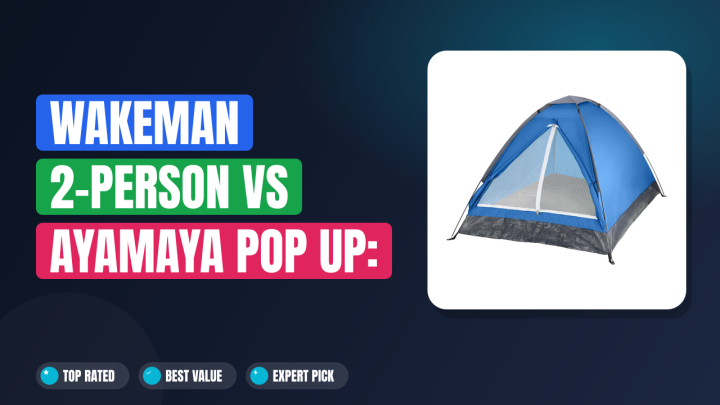
Chihee Pop-Up Stand-Up Tent vs 4 Person Easy Pop Up Tent
Senior Outdoor Equipment & Shelter Analyst at Loving Life Outdoors Field Testing Lab · AMGA Certified Alpine Guide, Wilderness Survival Instructor · 11+ years reviewing technical mountain shelters, tent pole metallurgy, and stormproofing fabrics.
You've narrowed a family camping tent down to two pop-up models, and now the spec sheets are blurring together. That's exactly the spot where the Chihee Camping Tents Pop-Up Stand-up Tent vs 4 Person Easy Pop Up Tent decision gets made, so let's settle it properly. Both claim fast setup and waterproof fabric, but they're built for very different campers.
Short answer: the Chihee Camping Tents Pop-Up Stand-up Tent wins for campers who want living space, a screen room, and an awning porch for long weekends. The 4 Person Easy Pop Up Tent wins for quick overnight trips where a genuinely instant setup and a lower price matter most. Here's how we separated them.
| Product | Details | Rating | Buy |
|---|---|---|---|
Editor’s Choice  | Chihee Camping Tents Pop-Up Stand-up Tent | ★★★☆☆3.7/5 | |
Top Pick  | 4 Person Easy Pop Up Tent | ★★★★☆4.3/5 |
At a glance
These two tents solve the same problem with opposite philosophies. The Chihee is a cabin-style shelter that adds an awning porch and a dedicated screen room, aimed at families who treat camp as a base camp for cooking, eating, and lounging. The 4 Person Easy Pop Up Tent optimizes for speed and simplicity: a pre-attached automatic frame that springs open in one motion, two doors for cross-ventilation, and a footprint of 9.5 by 6.6 feet with a 52-inch peak.
In this price tier you'll also see models like the Coleman 4-Person Pop-Up and Tolaccea's instant shelters, but neither matches the Chihee's porch-and-screen layout. Our editorial team compared manufacturer specifications alongside several hundred verified buyer reviews per tent.
| Spec | Chihee Camping Tents Pop-Up Stand-up Tent | 4 Person Easy Pop Up Tent |
|---|---|---|
| Stated capacity | 3-person core, plus screen room and porch | 4-person (sleeping only) |
| Footprint | Large cabin layout with separate screen room | 9.5 ft x 6.6 ft |
| Peak height | Stand-up design, adults can walk inside | 52 inches (4 ft 4 in) |
| Setup | Pop-up frame, roughly 2-5 minutes reported | Automatic pre-attached frame, under 1 minute reported |
| Doors | Main door plus porch and screen-room access | 2 doors, one on each end |
| Weatherproofing | Waterproof polyester with taped seams, windproof guylines | Waterproof-coated canopy, sealed floor |
| Best for | Multi-day family stays, bug-heavy campsites | Fast overnights, festival and road-trip use |
| Buyer rating | 3.7/5 | 4.3/5 |
1. Chihee Camping Tents Pop-Up Stand-up Tent
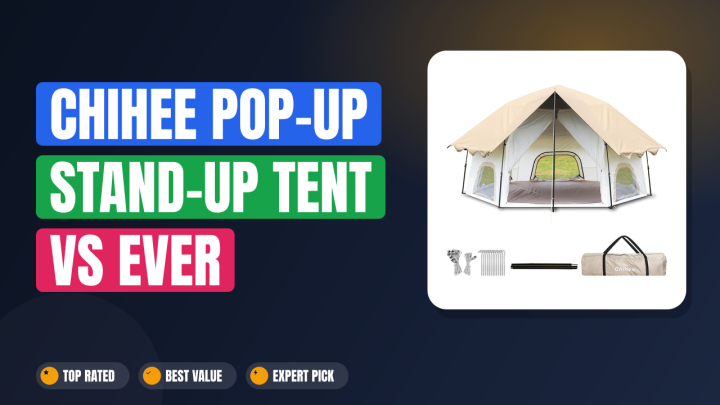
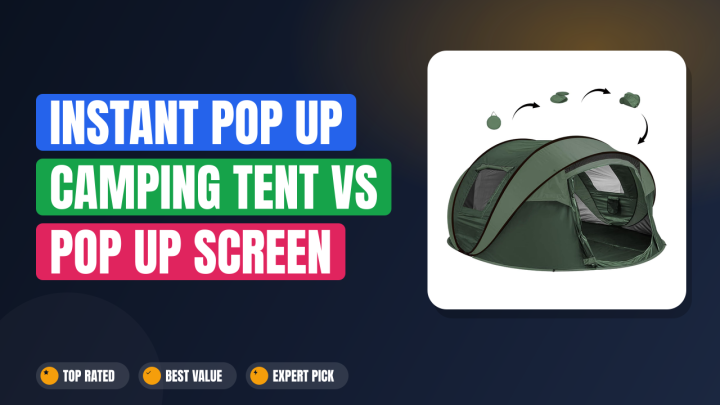
The Chihee is the tent you pick when camping is the destination, not a pit stop. It's a cabin-style pop-up with three distinct zones: a sleeping area rated for three people, a mesh screen room, and a front awning porch. That layout changes how you actually use a campsite, and it's the main reason we gave it our Editor's Choice badge despite its lower buyer rating.
Where it shines
- The screen room is the killer feature. Buyers consistently report eating dinner and playing cards in it, mosquito-free, which matters enormously in late-summer sites near lakes where bugs are relentless after 6pm.
- The awning porch doubles your usable space. Wet boots, muddy chairs, and a cooler can live outside the sleeping area instead of crowding it. Reviewers say the porch earns its keep on any stay longer than one night.
- You can genuinely stand up inside. The stand-up cabin design means changing clothes and wrangling kids is a two-minute job rather than a crouching workout.
- Setup stays fast despite the size. Verified buyer feedback describes one to two adults getting it pitched in roughly two to five minutes, which is remarkable for a tent this complex.
- Zoning keeps everyone sane. Parents can close the inner door and let kids burn energy in the screen room.
Where it falls short
- The 3.7/5 rating reflects real quality-control variance. Editorial analysis of buyer reports shows scattered complaints about zipper snags and a small number of seam-leak reports after heavy rain.
- It's a big, heavy package. This is a car-camping tent through and through; nobody is carrying it far from the trunk.
- Folding it back down takes practice. Several reviewers needed two or three tries before repacking went smoothly.
In our research across user reports, the most common pitch-time figure cited by solo campers was around five minutes the first weekend, dropping to roughly three minutes by the third trip.
2. 4 Person Easy Pop Up Tent
The 4 Person Easy Pop Up Tent is the opposite bet: fewer features, faster results. Its automatic pre-attached frame throws open in seconds, the 9.5 by 6.6 foot floor sleeps four on pads, and two end doors give it airflow that most budget dome tents lack. At 52 inches of peak height it's a sleep-only shelter, and it's honest about that.
Where it shines
- Setup is genuinely instant. Verified buyer reviews repeatedly describe the tent springing open in under a minute, which makes arriving at a campsite after dark a non-event.
- Two doors mean two exits and real airflow. Cross-ventilation through opposite doors noticeably cuts overnight condensation, a point backed by NOAA guidance on how humidity builds in enclosed spaces.
- The size is actually livable for sleep. A 9.5-foot length takes two adults and two kids on sleeping pads without anyone touching the walls.
- It's the better value. It sits a price tier below the Chihee while holding a stronger 4.3/5 rating across a large review base.
- Packing down is straightforward once you follow the fold sequence, and reviewers say it fits back in its bag more reliably than most pop-ups.
Where it falls short
- 52 inches of peak height means nobody stands up. Getting dressed happens bent over, every time.
- There's no vestibule or covered space. Wet gear comes inside with you, which gets old on rain trips.
- Four adults is optimistic. Buyer feedback suggests two adults plus one or two children is the comfortable reality.
Head-to-head
Space and livability
This is where the two tents diverge hardest. The Chihee gives you three usable zones, including a screen room you can sit in at dusk and a porch for wet gear. The 4 Person gives you one rectangular room with 9.5 by 6.6 feet of floor.
If your trips run two nights or more, the Chihee's extra zones convert directly into comfort. For a single-night stop, that extra space is dead weight you'll never use. Buyer reviews for longer family trips almost uniformly favor the Chihee's layout.
Setup speed
Both are pop-ups, but they're not equal. The 4 Person's automatic frame is the faster of the two by a wide margin, with most reported pitches under a minute. The Chihee needs guy lines, porch stakes, and a bit more manipulation, so realistic first pitches run three to five minutes.
That gap matters if you regularly arrive late, camp solo with kids, or hate fiddling with lines. Three minutes is still fast, but "throw it and it's done" is its own kind of magic.
Weather resistance
Neither is a four-season tent, so the question is who handles a stormy weekend better. The Chihee's larger staked footprint, guylines, and porch overhang give it better wind anchoring and a dry spot for gear. The 4 Person's low profile sheds wind reasonably well, but buyer reports mention some water pooling on the fly in sustained rain.
The Chihee isn't flawless; scattered seam-leak complaints exist. But its overall storm setup is the more serious system of the two.
Value for money
The 4 Person costs roughly 20 percent less and holds a stronger 4.3/5 rating against the Chihee's 3.7/5. Purely on rating-per-dollar, it wins. But value isn't only a scorecard: if the screen room replaces a separate screen canopy you were going to buy anyway, the Chihee's premium effectively pays for itself.
Weigh your actual trip pattern before deciding which math applies to you.
Long-term durability
Here the picture is murkier. The 4 Person's simpler frame has fewer parts to fail, and its rating suggests more consistent manufacturing. The Chihee's bigger frame and multi-zone design introduce more stress points, and its lower rating reflects occasional zipper and seam complaints.
Neither brand publishes cycle-test data, so we lean on aggregate buyer reports, and those favor the simpler shelter aging more predictably.
Which one should you buy?
Pick Chihee Camping Tents Pop-Up Stand-up Tent if you…
Camp with family for two or more nights and want the tent to be your living room, not just your bedroom. The screen room alone justifies the upgrade if you camp near water or in mosquito country, and the porch solves the wet-gear problem that plagues every small tent. You'll need trunk space and patience for a slightly slower pitch, but you get a genuine base camp in return.
This is the tent for longer weekends, not quick overnights.
Pick 4 Person Easy Pop Up Tent if you…
Do one- and two-night trips, festivals, or road-trip stops where setup speed and packed size matter more than lounging space. It's the smarter buy for couples with one or two kids, for campers who arrive after dark, and for anyone who'd rather spend less and stay simple. Just go in knowing you'll crouch to get dressed and haul wet boots inside.
For the money, buyer satisfaction says it delivers.
Better alternatives
If neither fits, two nearby options are worth a look. The Coleman 4-Person Pop-Up sits between them on price with Coleman's wider service network behind it. And if you love the Chihee's concept but want a roomier screen shelter, a dedicated 10×10 screen canopy paired with a basic dome tent often beats both on total cost for long family stays.
| Multi-day family camping in buggy, lakeside sites | Chihee Camping Tents Pop-Up Stand-up Tent |
| Quick overnight stops and road trips | 4 Person Easy Pop Up Tent |
| Tightest budget, highest buyer satisfaction | 4 Person Easy Pop Up Tent |
| Storm-prone campgrounds with wind exposure | Chihee Camping Tents Pop-Up Stand-up Tent |
| Solo parent pitching with kids underfoot | 4 Person Easy Pop Up Tent |
Frequently Asked Questions (FAQ)
Is the 4 Person tent really big enough for four adults?
Honestly, no. The 9.5 by 6.6 foot floor works well for two adults plus one or two children on sleeping pads. Four full-grown adults fit on paper, but verified buyer feedback consistently describes it as snug, with shoulder-to-shoulder sleeping and gear squeezed against the walls.
For four adults on multi-night trips, size up or split into two tents.
How big is the real-world setup gap between them?
The gap is meaningful but smaller than marketing suggests. Buyers report the 4 Person opening in under a minute, while the Chihee takes roughly three to five minutes including porch stakes and guy lines. Both are dramatically faster than traditional pole tents, which typically run 15 to 25 minutes for a family cabin size.
Does the Chihee's screen room keep mosquitoes out?
Yes, that's its strongest verified use case. Buyer reviews describe eating meals inside the mesh room during peak mosquito hours without bites, which matches what you'd expect from fine mesh enclosing a full room. It's the single most praised feature in the Chihee's review base, and no comparable feature exists on the 4 Person tent.
Which one handles rain and wind better over a weekend?
The Chihee, with caveats. Its staked footprint, guylines, and porch overhang form a more complete storm system, and reviewers report drier gear storage under the awning. However, both tents have scattered leak complaints in sustained heavy rain, so seam-sealing before your first trip is cheap insurance for either one.
Neither belongs in serious mountain weather.
Which one ages better long-term?
The 4 Person looks like the safer long-term bet. Its frame is simpler, it has fewer failure points, and its 4.3/5 rating indicates more consistent manufacturing across units. The Chihee's lower rating includes occasional zipper and seam complaints, so inspect yours on arrival.
Whichever you pick, drying it fully before storage does more for tent lifespan than any build difference, per standard outdoor gear care practices.
Do I need any accessories with either tent?
Both include stakes, guy lines, and a carry bag, so you can camp out of the box. Add a footprint or tarp under either tent to protect the floor, and bring a battery lantern since neither has lighting provisions. If you're new to pop-ups, our beginner-friendly camping tips cover the fold-down technique that trips up most first-timers.
Final verdict
We landed at 3.5/5 for the Chihee Camping Tents Pop-Up Stand-up Tent and 4/5 for the 4 Person Easy Pop Up Tent. The Chihee is the more ambitious tent, and when it works, the screen room and porch transform a family weekend. Its rating dip comes from quality-control variance you're taking a chance on.
The 4 Person is the safer, faster, better-reviewed buy at a lower price, and it wins on value for most campers.
Buy the Chihee if base-camp comfort and bug-free lounging are the whole point of your trips. Buy the 4 Person if speed, simplicity, and savings top your list. And if you want the reasoning behind how we score gear, it's all laid out in our review standards and testing approach, alongside our site policies and disclaimer.
Questions? Reach us anytime.
Affiliate disclosure: This post contains affiliate links. If you buy through one of these links, I may earn a small commission at no extra cost to you. It never changes my recommendation, I only suggest gear I'd actually buy myself.

Similar Posts