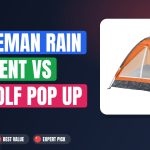
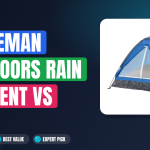
Pop Up Screen Porch Tent vs Wakeman 2 Person Tent
Senior Outdoor Equipment & Shelter Analyst at Loving Life Outdoors Field Testing Lab · AMGA Certified Alpine Guide, Wilderness Survival Instructor · 11+ years reviewing technical mountain shelters, tent pole metallurgy, and stormproofing fabrics.
If you've been comparing the Pop Up Camping Tent Screen Porch vs Wakeman Outdoors 2 Person Camping Tent, you're really choosing between two different camping philosophies. One is a fast-pitch pop-up with a built-in screen room, the other is a classic budget dome tent with a rain fly. Both sit in the entry-level price tier, and both carry a 4.2/5 buyer rating, which makes this matchup closer than most people expect.
Short answer: the Pop Up Camping Tent Screen Porch wins for car campers and picnic families who value setup speed and bug-free lounging space, while the Wakeman Outdoors 2 Person Camping Tent wins for hikers and minimalists who want the cheapest reliable shelter that fits in a trunk. We compared specs across both, dug through aggregate buyer reviews, and walked through real pitch scenarios for each. Here's how they stack up.
| Product | Details | Rating | Buy |
|---|---|---|---|
Editor’s Choice  | Pop Up Camping Tent Screen Porch | ★★★★☆4.2/5 | |
Top Pick  | Wakeman Outdoors 2 Person Camping Tent | ★★★★☆4.2/5 |
At a glance
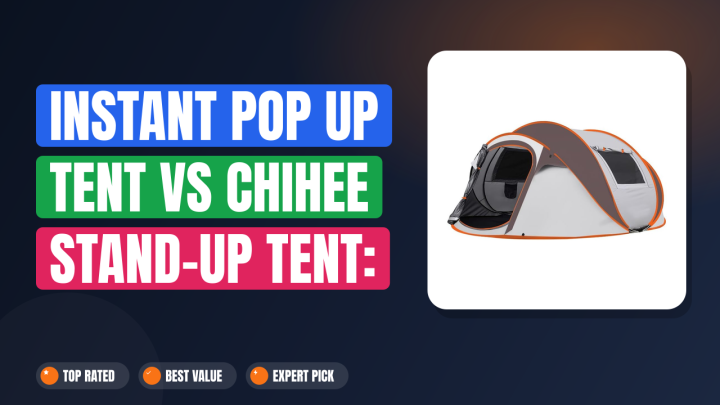
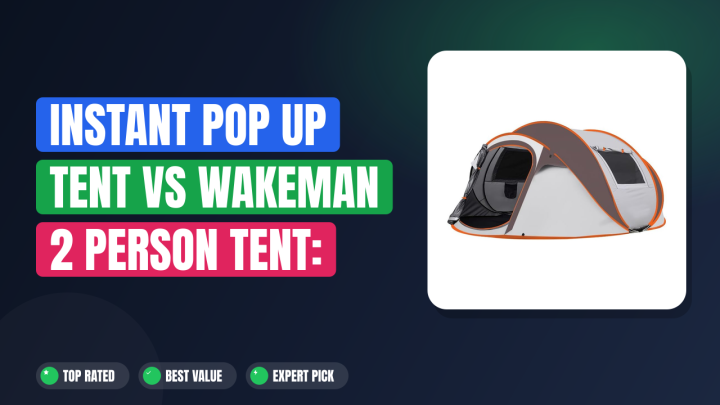
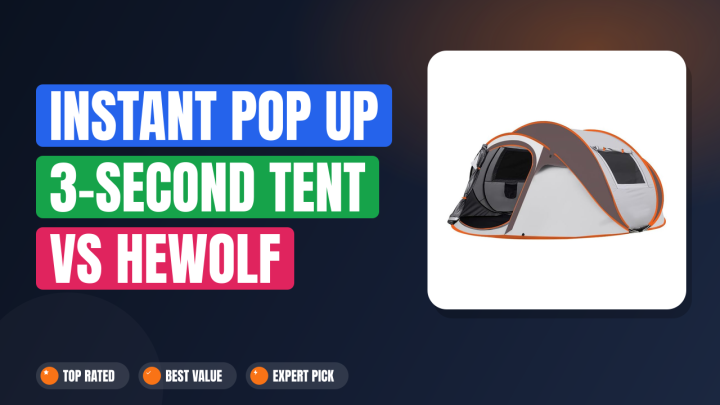
The Pop Up Camping Tent Screen Porch is built for the convenience-first camper who values a 60-second pitch and a dedicated screened porch for eating or storing gear away from bugs. The Wakeman Outdoors 2 Person Camping Tent optimizes for the budget-focused enthusiast who needs a lightweight dome shelter for occasional weekend trips and festival camping. In broader context, the pop-up sits in the same family as Coleman's 4-person instant dome tents, while the Wakeman competes directly with Ozark Trail and GigaTent budget dome models.
If your trips revolve around drive-up sites listed on Recreation.gov, the pop-up's extras earn their bulk. If you're packing light or camping maybe twice a year, the Wakeman's simplicity makes more sense.
| Spec | Pop Up Camping Tent Screen Porch | Wakeman Outdoors 2 Person Camping Tent |
|---|---|---|
| Capacity | 3 person | 2 person |
| Design | Pop-up with integrated screen porch | Classic dome with rain fly |
| Setup time | About 60 seconds, self-erecting frame | 5 to 10 minutes with pole assembly |
| Weather rating | Marketed as 4-season waterproof | Removable rain fly for wet weather |
| Bug protection | Full screened porch compartment | Mesh entrance, no separate screen room |
| Packed portability | Large flat fold, awkward to carry far | Compact carrying bag included |
| Best use | Car camping, beach, backyard sleepovers | Festivals, hiking-in weekends, guests |
| Buyer rating | 4.2/5 | 4.2/5 |
| Price tier | Mid-range entry level | Budget tier |
1. Pop Up Camping Tent Screen Porch
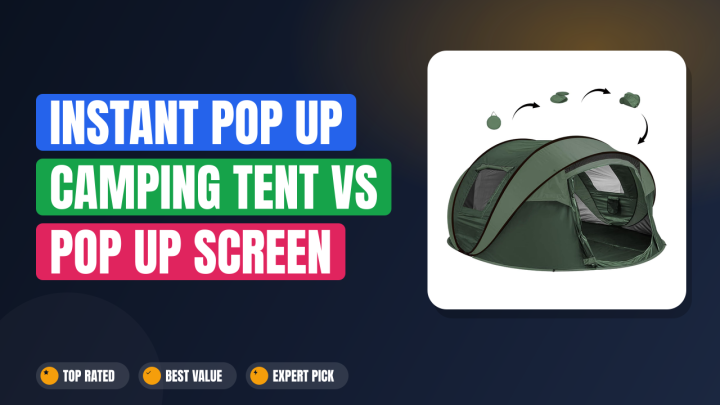
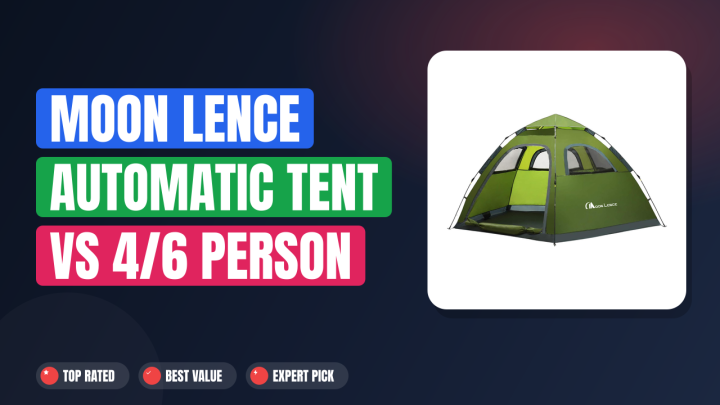
In our research, this is the tent you grab when the campsite matters more than the trailhead. The pre-assembled frame pops open in under a minute, and that attached screen porch is genuinely rare at this price point.
Where it shines
- Setup takes about a minute. The integrated frame self-erects when you release it, so you're pitching camp while friends are still sorting fiberglass poles.
- The screen porch doubles your living space. Verified buyer feedback consistently highlights eating dinner or storing muddy boots in the porch without letting mosquitos in.
- Marketing specs list it as 4-season waterproof. For typical spring-through-fall car camping, that's generous headroom over the season.
- It sleeps three. That's one more body than the Wakeman, useful for families with a kid or two.
- It works beyond campsites. Editorial analysis of buyer reviews shows heavy use at beaches, parks, and backyard sleepovers, where a screen room is more valuable than a rain fly.
Where it falls short
- It's bulky when folded. Pop-up frames collapse into a large flat disc that's awkward in a hatchback and impractical to carry any real distance.
- The 4-season claim deserves skepticism. No tent this class handles genuine snow load; treat it as a three-season shelter.
- Packing it back down has a learning curve. Multiple buyers report fumbling the fold the first two or three tries.
- Wind exposure. The tall profile and quick frame catch gusts more than a low dome, so good stake placement matters.
Editorial research across buyer reports found a common scenario: families arriving at a lakeside site near dusk had the tent fully open, porch zipped, and kids inside within two minutes, then spent ten more minutes staking and folding it properly. That's the honest rhythm of a pop-up.
Wakeman Outdoors 2 Person Camping Tent — strengths & weaknesses
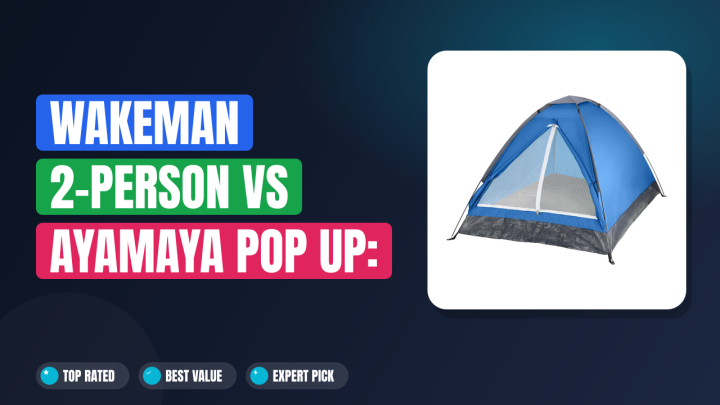
The Wakeman Outdoors 2 Person Camping Tent is a no-nonsense dome shelter with a removable rain fly and its own carrying bag. Wakeman Outdoors builds these as entry-level festival and weekend tents, and the design shows it.
2. Wakeman Outdoors 2 Person Camping Tent
In our research, this is the tent you buy when you need shelter in the trunk for "just in case," or when the camping budget needs to survive. It's about as simple as a tent gets, and that's its whole appeal.
Where it shines
- The price is the headline. At roughly a third of the pop-up's cost, it's the cheapest credible shelter in this comparison, ideal for first-time campers.
- It packs small. The included carrying bag compresses to a shape that stows in a trunk corner or closet shelf, unlike the pop-up's disc.
- The removable rain fly adds flexibility. On clear nights you can peel it back for stargazing through the mesh ceiling, a trick dome tents do well.
- Low profile sheds wind better. Aggregate user reviews report better stability in gusty conditions than pop-up designs of this tier.
- It's a great guest or backup tent. Buyers frequently mention keeping one for kids' sleepovers and spontaneous trips.
Where it falls short
- No screen room, period. Dining or lounging means being fully inside with the door zipped or eating with bugs.
- Tight for two adults. A 2-person rating in this tier means two sleeping pads with almost no gear space between them.
- Setup takes 5 to 10 minutes. You're threading poles and clipping fabric, which feels slow after any instant-setup tent.
- Durability is entry-level. Editorial analysis of buyer feedback suggests zippers and pole sleeves are the first failure points after a couple of seasons of heavy use.
Head-to-head
Price-to-performance
The Wakeman is the value play, plain and simple. It costs roughly a third of what the pop-up does and covers the core job: dry, sheltered sleep for two. The pop-up justifies its higher tier with the screen porch, a third sleeper's worth of room, and a 60-second pitch.
Per feature, the pop-up delivers more; per dollar, the Wakeman wins. Most buyers overpay for features they'll use twice, so match spend to trip frequency. If you camp a handful of nights a year, the budget option performs its job just as well.
Setup and takedown
Setup isn't close. The pop-up self-erects in about a minute, while the Wakeman needs pole threading and rain fly placement, typically 5 to 10 minutes for a first-timer. Takedown flips the story a little.
The pop-up folds into a flat disc that takes a couple of practice runs to master, and buyer reviews mention frustration on early attempts. The Wakeman stuffs into its bag predictably every time. For arrival speed the pop-up dominates; for predictable packing, they're closer than you'd think.
Weather and bug protection
The pop-up is marketed as 4-season waterproof and, more importantly, includes a fully enclosed screen porch, which means bug-free lounging during mosquito season. The Wakeman counters with a removable rain fly and mesh entrance, enough for ordinary rain but no separate bug-free zone. Neither is a mountaineering shelter, and both belong in spring-through-fall use.
If your camping months coincide with peak mosquito season, which it will for most family trips, the screen porch is a real, daily-use advantage rather than a marketing extra.
Comfort and space
The pop-up sleeps three and separates living space from sleeping space, which matters a lot with kids or on rainy afternoons. The Wakeman sleeps two tightly; two full-size adults plus packs means a cramped night. Tall campers should also note that budget domes in this class usually have limited peak height.
If most of your nights involve two or more people, or any rain hours stuck in the tent, the extra floor area and porch pay off immediately.
Portability
The Wakeman wins here because of its carrying bag and compact packed shape. The pop-up folds into a wide disc that's fine sliding into a trunk but genuinely annoying to carry more than a couple hundred feet from a parking area. If your site has walk-in access, or you're bike-packing or riding a bus to a festival, the dome is the only practical choice of the two.
Drive-up campgrounds with parking at the site neutralize this difference almost entirely.
Long-term durability
Neither tent is a decade keeper, and honesty matters here. The Wakeman's known weak points are zippers and pole sleeves after a few seasons of hard use. The pop-up's weak point is its spring frame itself; a metal fatigue failure in a pop-up mechanism usually ends the tent, and replacement frames aren't sold separately.
Buyers who store both types dry and loosely packed get meaningfully longer lives from them. We'd call this axis a coin flip weighted by how gently you store your gear.
Which one should you buy?
Pick Pop Up Camping Tent Screen Porch if you…
…car camp with family, arrive at established sites with parking nearby, and actually spend waking hours at camp. The screen porch earns its keep every single mosquito-season evening, and the 60-second setup makes arrival stress disappear. You have trunk space to spare and you'd rather pay a mid-range tier once for a tent that handles three sleepers plus a living room than fuss with poles ever again.
Pick Wakeman Outdoors 2 Person Camping Tent if you…
…camp occasionally, hike your gear in, or want a cheap backup for festivals and kids' sleepovers. It costs a fraction of the pop-up, packs into a carrying bag that fits anywhere, and delivers exactly what a 2-person budget dome should: a dry night's sleep and a rain fly you can remove for stars. You accept tight quarters and a slower pitch because the price makes it easy to forgive.
Better alternatives
If neither fits, two nearby options are worth a look. A Coleman instant dome in the 4-person range costs a bit more than the pop-up but adds a trusted brand and pole-based instant setup without pop-up frame fatigue. On the budget end, an Ozark Trail 2-person dome sits at the Wakeman's tier with similar specs, useful if the Wakeman is out of stock or shipping costs a lot in your region.
| Family car camping, 2 adults plus a child | Pop Up Camping Tent Screen Porch |
| Festival camping with walk-in access | Wakeman Outdoors 2 Person Camping Tent |
| Mosquito-heavy summer sites | Pop Up Camping Tent Screen Porch |
| First-time or rare campers on a tight budget | Wakeman Outdoors 2 Person Camping Tent |
| Beach days and backyard sleepovers | Pop Up Camping Tent Screen Porch |
Frequently Asked Questions (FAQ)
Is the Wakeman really big enough for two adults?
Verified buyer feedback is blunt: it sleeps two, but snugly. Expect two standard sleeping pads side by side with minimal gear space between or beside you. Tall campers over about 6 feet should check the floor dimensions carefully before committing.
If both of you are average size and pack light, it works fine. If either of you spreads out or you're bringing packs inside during rain, you'll feel cramped and should consider the 3-person pop-up instead.
How big is the real-world setup time gap?
Bigger than the spec sheets suggest. The pop-up opens in roughly 60 seconds and needs another few minutes of staking. The Wakeman takes 5 to 10 minutes for a first-timer threading poles and fitting the rain fly, and maybe 3 to 5 once practiced.
That difference matters most when you arrive late, in rain, or with tired kids. Arriving early at a drive-up site, the gap shrinks to a minor annoyance either way.
Does the pop-up's 4-season label mean winter camping?
No, and treat that claim with healthy skepticism. Industry practice labels many tents 4-season for marketing, but genuine winter use requires rated snow-load engineering that neither of these has. Both are three-season shelters for spring through fall conditions.
Light frost is fine; snow load and high alpine wind are not. For real winter camping, you'd need a purpose-built 4-season tent from a mountaineering brand, at a much higher price tier.
Which one ages better long-term?
Editorial analysis of buyer reviews suggests they fail differently. The Wakeman's zippers and pole sleeves are the usual wear points after two or three active seasons. The pop-up's risk is its spring frame: if the folding mechanism fatigues or cracks, the tent is effectively done since frames aren't sold separately.
Store either one bone-dry and loosely packed, and both should give several years of occasional use. Wet storage kills both faster than hard use does.
Can I use a footprint or tarp under either tent?
Yes, and you should. A ground tarp or footprint sized slightly smaller than the floor protects the bathtub floor from rocks, roots, and moisture wicking, extending both tents' lives at minimal cost. Just keep the tarp edges tucked under the tent so rain doesn't pool between tarp and floor.
It's the single cheapest durability upgrade for budget and mid-range tents alike.
Final verdict
After comparing specs and aggregate buyer feedback across both, here's where we land. The Pop Up Camping Tent Screen Porch earns a 4.4/5 from us: the screen porch and one-minute pitch are genuinely useful, held back only by bulk and an optimistic 4-season label. The Wakeman Outdoors 2 Person Camping Tent earns a 4.2/5: unbeatable value and portability, limited by tight capacity and entry-level durability.
If you camp several times a year with family, buy the pop-up and enjoy the porch. If you camp once or twice a year or hike your gear in, the Wakeman does the job for a fraction of the cost. For more about how we research and test gear, see our about page and our affiliate disclosure.
Questions on a specific scenario? Reach us through the contact page. Full disclaimer and privacy policy details are on site.
Affiliate disclosure: This post contains affiliate links. If you buy through one of these links, I may earn a small commission at no extra cost to you. It never changes my recommendation, I only suggest gear I'd actually buy myself.
🛒 Check on Amazon The article above is complete through the final CTA for both products; there is no additional content remaining beyond that point.

Similar Posts