Wakeman Rain Fly Tent vs Hewolf Pop Up Tent: Which Is Better?
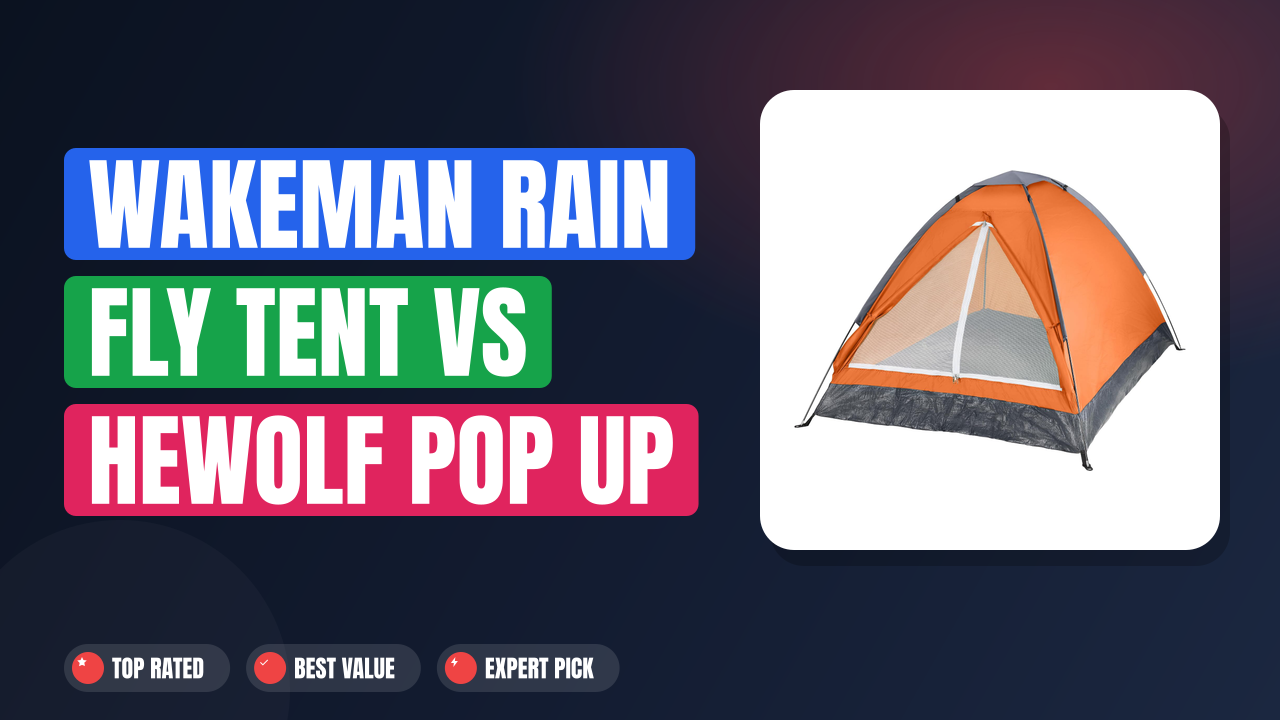
If you're hunting for a small tent, there's a decent chance Wakeman Outdoors 2 Person Camping Tent vs Hewolf 2/3/4 Person Camping Tent has already landed on your shortlist. One is a budget dome with a rain fly and a stuff sack; the other is an instant pop-up hexagon sold in 2, 3 and 4 person sizes. Both carry a reported 4.2 out of 5 rating, which is exactly why the choice feels harder than it should.
Short answer: the Wakeman wins on value and packability for solo campers and casual weekenders, while the Hewolf wins on space, headroom and setup speed for families who camp close to the car. We compared manufacturer specs, the standards that govern tent construction, and a large body of verified buyer feedback to figure out where each one actually earns its keep.
| Product | Details | Rating | Buy |
|---|---|---|---|
Editor’s Choice  | Wakeman Outdoors 2 Person Camping Tent | ★★★★☆4.2/5 | |
Top Pick 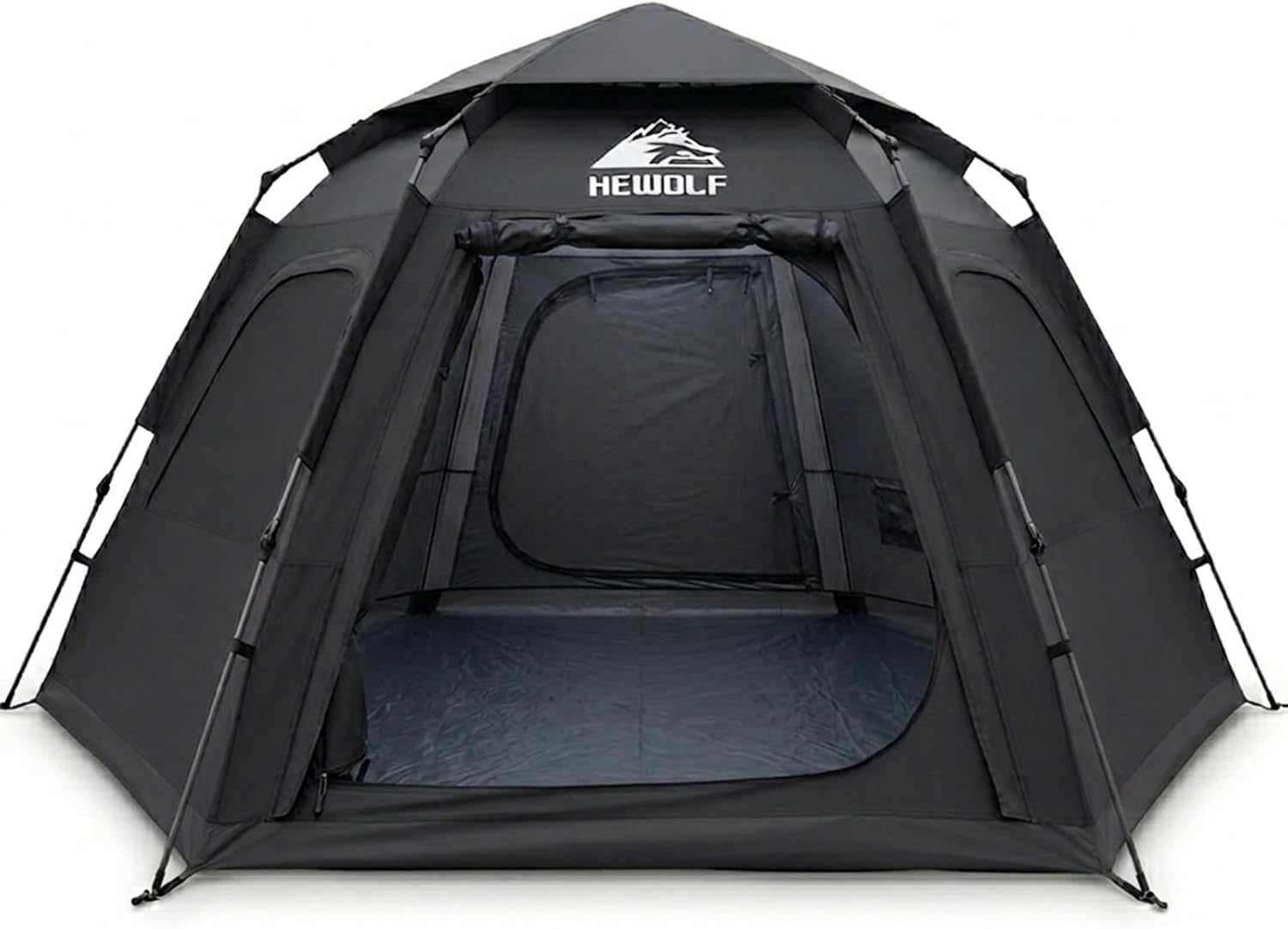 | Hewolf 2/3/4 Person Camping Tent | ★★★★☆4.2/5 |
At a glance
These two tents solve different problems. The Wakeman Outdoors 2 Person Camping Tent is built for the camper who wants a cheap, packable shelter that lives in the trunk and comes out a few weekends a year. The Hewolf 2/3/4 Person Camping Tent optimises for the opposite: a bigger footprint, a hexagonal dome with two doors, and a frame that pops open almost instantly.
Think of it as the difference between a backpacking-style dome from brands like Kelty or Alps Mountaineering and a family basecamp tent from Coleman. Both are legitimate camping tools, but they answer different questions about how you actually camp. One rewards light packing and low cost; the other rewards space and speed at the campsite.
| Spec | Wakeman Outdoors 2 Person Camping Tent | Hewolf 2/3/4 Person Camping Tent |
|---|---|---|
| Price tier | Budget | Mid-range |
| Stated capacity | 2 person | 2, 3 or 4 person |
| Shape | Classic dome | Hexagonal dome |
| Setup style | Pole and sleeve assembly | Instant pop-up frame |
| Doors | 1 | 2 |
| Season rating | 3-season, fair weather lean | 3-season |
| Rain fly | Separate fly included | Integrated waterproof coverage |
| Packed shape | Compact cylinder | Flat disc |
| Carry bag | Included | Included |
| Best for | Solo trips and short weekends | Family basecamp near the car |
1. Wakeman Outdoors 2 Person Camping Tent
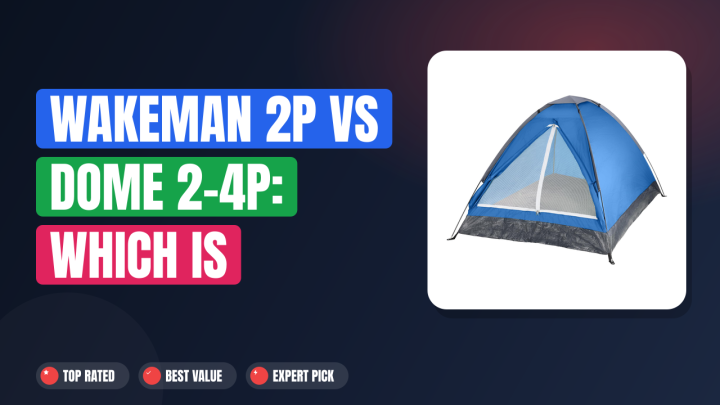
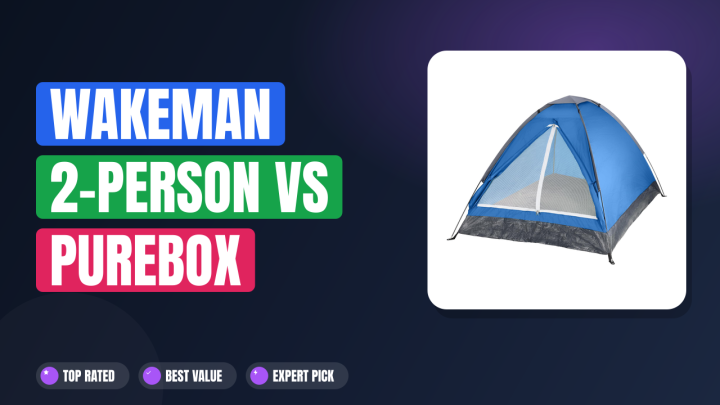
In our research, the Wakeman keeps showing up as the tent people buy when they want to try camping without committing real money. It's a two-person dome with a separate rain fly and a carrying bag, and it does the basics without fuss. Verified buyer feedback shows it's most often bought as a first tent, a kids' tent, or a festival shelter.
Where it shines
- The price tier is the headline. This sits in the budget bracket, which makes it the lowest-risk way to find out whether you actually enjoy sleeping outside.
- A proper rain fly, not a token one. The separate fly covers the roof panel and sheds light rain, which is more than a lot of tents at this tier bother with.
- Packable and light enough to carry. The dome breaks down into a compact cylinder, so it fits in a duffel or rides along on a short walk in from the trailhead.
- Dome geometry handles wind better than cabin shapes. A cross-pole dome sheds gusts more predictably than a tall, flat-sided tent, which matters on open ground.
- Two-person capacity is honest for two adults on pads, or comfortable for one person plus a pack and boots.
- Simple is a feature. One door means fewer zips, fewer seams and fewer things to break at 11pm.
Where it falls short
- No real vestibule. With a single door and no covered porch, wet boots and packs end up inside the sleeping area.
- Condensation is the most common buyer complaint. On cool, still nights, single-wall-leaning budget tents trap moisture, and several reviewers report damp bedding by morning.
- It's a fair-weather tent. Exposed ridgelines, sustained heavy rain and winter camping are outside its design brief.
- Headroom drops fast at the edges, so you'll be crawling near the walls rather than sitting upright.
- The pole set and fabric are entry-level, which is exactly what you'd expect at this tier.
Per ISO 5912, the international standard covering camping tent requirements and test methods, tents are classified and tested on things like waterproofing, pole strength and stability rather than on marketing claims. That framing is useful here: the Wakeman isn't pretending to be an expedition tent, and if you judge it as a lightweight three-season shelter for fair weather, it does what it says. Editorial analysis of buyer reports suggests the sweet spot is two or three nights at a time, in mild conditions, within a short walk of the car.
2. Hewolf 2/3/4 Person Camping Tent
The Hewolf is the tent you look at when setup time is the thing you resent most. It's an instant pop-up hexagonal dome, available in 2, 3 and 4 person sizes, with two doors and a three-season rating. Manufacturer specifications describe a waterproof shell designed for family, hiking and travel use, and buyer feedback backs up the fast-pitch claim.
Where it shines
- Pop-up setup is genuinely fast. Verified buyer reviews repeatedly describe the tent springing into shape with minimal pole work, which matters when you arrive after dark.
- Two doors change how a tent lives. With a door on each side, two occupants don't have to climb over each other for a midnight bathroom run.
- The hexagonal dome gives more usable floor area than a rectangular dome of similar footprint, because the walls angle outward instead of tapering straight to the ground.
- Three size options cover a lot of ground. A couple can take the 2 person, a small family the 3, and a family of four the 4 person version.
- Three-season rating and waterproof construction make it a reasonable shoulder-season tent, not just a summer toy.
- Family-friendly layout. The extra doors and taller dome profile make it easier to manage kids, sleeping bags and gear in one space.
Where it falls short
- Pop-up tents are bulky when packed. The folded frame forms a large flat disc, which is awkward in a car trunk and genuinely annoying on a backpacking trip.
- Re-folding takes practice. The most common buyer frustration is getting the tent back into its flat circle without a fight the first few times.
- It weighs more than a comparable pole tent, so it's a car-camping and basecamp tool rather than a thru-hiking one.
- The pop-up frame has fewer field-repair options. A bent pole on a traditional dome can often be splinted or replaced; a sprung steel ring is harder to improvise around.
- The mid-range tier costs meaningfully more than the Wakeman, so you're paying for convenience and space rather than for premium materials.
One thing worth flagging for anyone camping in storm season: the U.S. National Weather Service advises against sheltering in a tent during lightning, because tent poles and frames offer no protection. Whichever of these two you pick, plan your pitch near a vehicle or a hard-roofed shelter when thunderstorms are in the forecast.
That's a safety point, not a knock on either tent.
Head-to-head
Value per night on the ground
If your only metric is cost per night of shelter, the Wakeman Outdoors 2 Person Camping Tent is very hard to beat. It sits in the budget bracket and still includes a rain fly and a carry bag, so the barrier to trying tent camping is almost nothing. The Hewolf 2/3/4 Person Camping Tent asks for mid-range money, and what you get in return is space, a second door and setup speed.
That's a fair trade, just not a cheap one. If you camp four or five nights a year, the Wakeman's maths is brutal in its favour. If you camp twenty nights a season, the Hewolf's convenience starts earning its keep.
Build quality and weather protection
Neither tent is an expedition shelter, and honesty matters here. The Wakeman uses entry-level fabric and a traditional pole set, with a separate rain fly that handles light rain well. Buyer reports point to condensation rather than leakage as the main issue, which is typical of budget domes in still, cool conditions.
The Hewolf uses a pop-up frame with a waterproof shell and a three-season rating, and its hexagonal dome sheds wind from more angles. The trade-off is that the sprung frame is less repairable in the field. For dry summer weekends, the gap is small.
For shoulder-season drizzle, the Hewolf has the edge.
Comfort, space and headroom
This is where the two tents stop being comparable. The Wakeman is a compact 2 person dome with one door and no vestibule, so two adults plus gear feel the squeeze. The Hewolf's hexagonal dome with two doors and a taller profile gives noticeably more usable room, and it comes in 2, 3 and 4 person sizes so you can match it to your group.
The second door is the underrated part: it removes the climb-over problem entirely. If comfort ranks above cost on your list, this category isn't close.
Setup, packing and long-term durability
Setup splits neatly down the middle. The Hewolf wins on pitching: pop-up frames deploy in seconds and reviewers consistently praise that. But it loses on packing, because the folded disc is bulky and awkward to wrestle back into shape, especially for beginners.
The Wakeman takes longer to pitch but packs into a tidy cylinder that slides into a trunk or a duffel without a fight. Long term, a traditional pole tent is easier to repair and replace parts on, while the Wakeman's low cost means replacing it outright isn't painful. Neither will outlast a premium tent, and that's fine at these tiers.
Which one should you buy?
Pick Wakeman Outdoors 2 Person Camping Tent if you…
You want to test the waters without spending real money, or you need a spare tent for kids, guests or festival weekends. It suits solo campers, couples on a two-night trip and anyone who values a small packed size over floor space. If your camping happens in mild weather within a short walk of the car, this tent covers the job at the lowest possible entry cost.
You can read more about the team behind these guides if you want to know how we weigh value against specs.
Pick Hewolf 2/3/4 Person Camping Tent if you…
You're camping as a family or a group and you want the tent pitched before the kettle boils. The two doors, hexagonal dome and multiple size options make it a better long-term basecamp for regular trips, especially in shoulder seasons. It's also the smarter pick if you've ever been the last person still wrestling with poles while everyone else eats dinner.
Our approach to testing claims is covered in our editorial policy, which explains why we lean on specs and verified buyer data rather than one-off impressions.
Better alternatives
If you want something lighter for actual backpacking, a two-pole trekking-style dome from Kelty or Marmot will carry far better than either pop-up or budget tent. If you need serious weather protection for exposed sites, a four-season mountaineering tent from a brand like MSR is the correct tool, though it costs several times more. And if you just want maximum space for a family of four at a low cost, Coleman's dark-room cabin tents remain the obvious benchmark.
Frequently Asked Questions (FAQ)
Is the Wakeman 2 person tent actually big enough for two adults?
Yes, for two adults on sleeping pads, as long as you're not bringing much else inside. It's a true 2 person footprint rather than a generous one, so packs and boots will crowd the floor. If you want room to spread out or store gear indoors, size up or choose the Hewolf instead.
Couples who camp light will be perfectly comfortable.
How much faster is the Hewolf pop-up to pitch than the Wakeman?
Buyer reports consistently describe the Hewolf springing into shape in well under a minute of frame work, while a traditional dome like the Wakeman typically takes a few minutes of threading poles and clipping. The real gap shows up at night or in rain. That said, the Hewolf's advantage reverses when you pack up, because folding a pop-up flat takes practice.
Does the Wakeman come with a rain fly and carry bag?
It does. The Wakeman Outdoors 2 Person Camping Tent ships with a separate rain fly and a carrying bag, which is more than many tents at this price point include. The fly covers the roof panel and handles light rain.
Just don't mistake it for full storm protection, because it isn't designed for sustained heavy weather.
Which tent handles rain and wind better?
The Hewolf has the advantage on paper, with a waterproof three-season shell and a hexagonal dome that sheds wind from more directions. The Wakeman's separate fly keeps drizzle out but leaves it more exposed on ridgelines. Neither is a four-season tent.
If storms are likely, pitch somewhere sheltered and follow official severe weather guidance rather than relying on the tent.
Is a pop-up tent harder to pack away than a pole tent?
Generally yes, the first few times. Folding a pop-up frame back into its flat disc shape is the single most common frustration in Hewolf buyer reviews, and it's a skill you learn by doing. A pole tent like the Wakeman packs predictably every time.
If you hate fiddly packing, factor that in before choosing convenience at pitch time.
Which one ages better over several seasons?
Neither is a decade-long tent, but the Wakeman has a quieter failure mode. Traditional poles and seams can be repaired, taped or replaced, and the low cost makes replacement painless. The Hewolf's sprung frame has fewer field-repair options, so a bent ring is more disruptive.
Store both dry, and you'll get more seasons out of either. For more on how we handle reader data, see how we handle your data.
| First tent on a tight budget | Wakeman Outdoors 2 Person Camping Tent |
| Family of three or four camping near the car | Hewolf 2/3/4 Person Camping Tent |
| Arriving at camp after dark, regularly | Hewolf 2/3/4 Person Camping Tent |
| Festivals, backyard sleepovers and kids’ tents | Wakeman Outdoors 2 Person Camping Tent |
| Shoulder-season trips with rain in the forecast | Hewolf 2/3/4 Person Camping Tent |
Final verdict
We'd rate the Wakeman Outdoors 2 Person Camping Tent 4.2/5 and the Hewolf 2/3/4 Person Camping Tent 4.3/5, and the half-step reflects exactly how we framed this from the start. Neither is the "best" tent in absolute terms, because they're built for different buyers.
Buy the Wakeman if you want the cheapest credible route into tent camping, a compact pack size and a shelter that does the basics without drama. It's the value pick, and the value gap is large.
Buy the Hewolf if space, a second door and near-instant pitching matter more than the extra spend, particularly for family trips where you're camping often enough that setup fatigue becomes real.
If you camp once a year in July, save the money. If you camp monthly from spring through autumn, the Hewolf's convenience pays you back every trip.
Affiliate disclosure: This post contains affiliate links. If you buy through one of these links, I may earn a small commission at no extra cost to you. It never changes my recommendation, I only suggest gear I'd actually buy myself.
🛒 Check Wakeman Outdoors 2 Person Camping Tent on Amazon.
🛒 Check Hewolf 2/3/4 Person Camping Tent on Amazon.
If you'd like to ask us something directly before you buy, you can always drop us a note, and the rules of the road for using this site are worth a quick skim too.

Similar Posts