Coleman Sundome vs AYAMAYA Pop Up: Which Is Better?
Senior Outdoor Equipment & Shelter Analyst at Loving Life Outdoors Field Testing Lab · AMGA Certified Alpine Guide, Wilderness Survival Instructor · 11+ years reviewing technical mountain shelters, tent pole metallurgy, and stormproofing fabrics.
Picking a new tent often feels like solving a puzzle with missing pieces. You want weather protection, easy setup, and enough space for your family or friends. In this Coleman Sundome Camping Tent Rainfly vs AYAMAYA Waterproof 4/6 Person Easy Pop comparison, we look at two popular options that serve different camping styles.
One relies on traditional pole structure and brand heritage. The other offers instant pop-up convenience with modern fabric treatments.
Short answer: Coleman wins for durability in harsh storms and established resale value. AYAMAYA wins for speed of setup and casual backyard use. Let’s break down why these differences matter for your next trip.
| Product | Details | Rating | Buy |
|---|---|---|---|
Editor’s Choice  | Coleman Sundome Camping Tent Rainfly | ★★★★☆4.6/5 | |
Top Pick 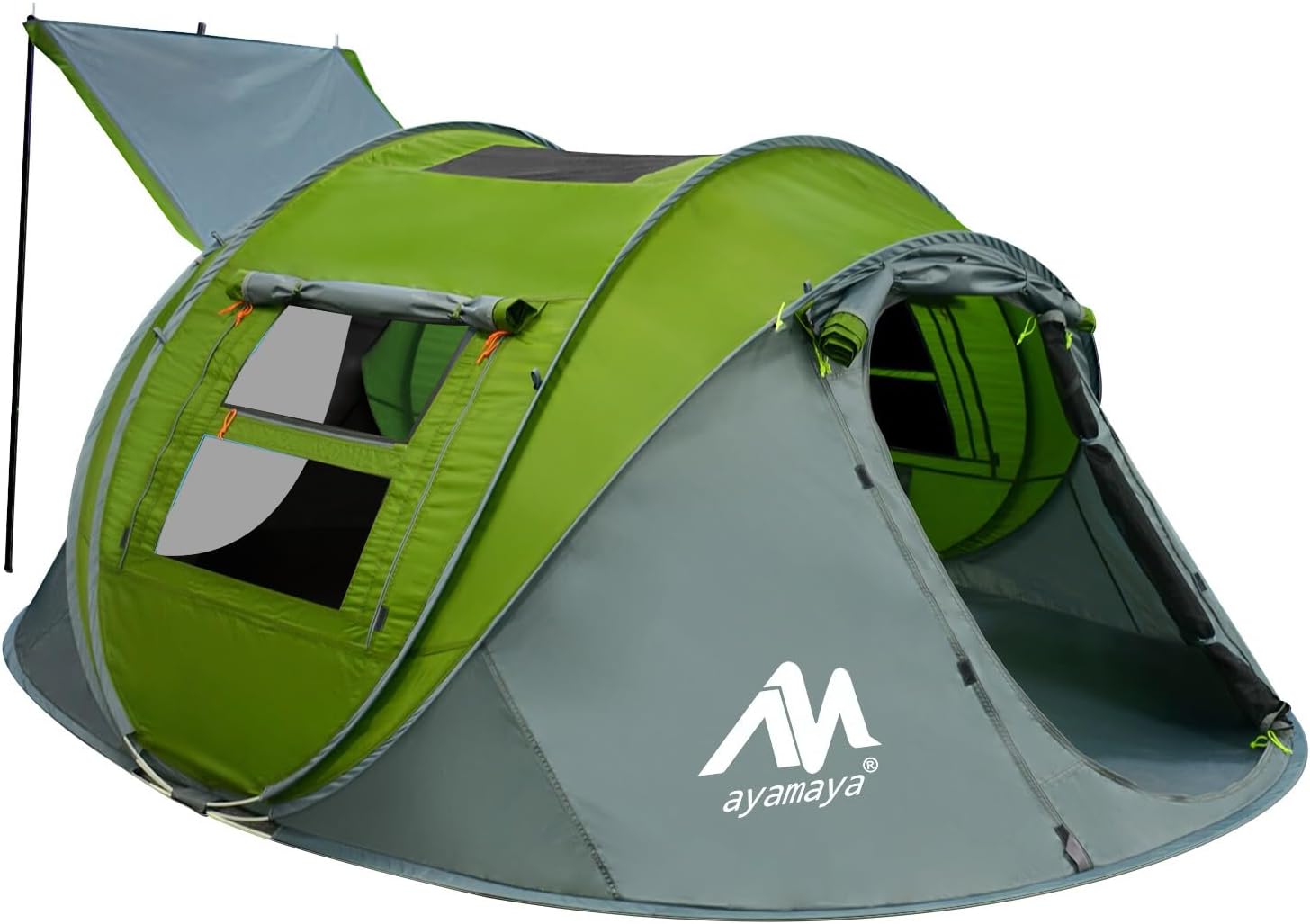 | AYAMAYA Waterproof 4/6 Person Easy Pop | ★★★★☆4.2/5 |
At a glance
The Coleman Sundome represents the traditional "workhorse" approach to shelter. It uses fiberglass poles and a separate rainfly system designed for stability against wind and heavy rain. This design appeals to campers who prioritize long-term durability and weather resistance over speed.
In contrast, the AYAMAYA focuses on immediate accessibility. Its pop-up mechanism allows one person to erect the main structure in seconds. This model targets festival-goers, beach users, and families who need quick shade or light sleeping arrangements without complex assembly.
While less robust in extreme storms, it excels in convenience. Competitors like the Ozark Trail Instant Cabin offer similar ease but often lack the vestibule storage found here.
| Spec | Coleman Sundome Camping Tent Rainfly | AYAMAYA Waterproof 4/6 Person Easy Pop |
|---|---|---|
| Setup Time | ~10 minutes (two people recommended) | ~1 minute (single person capable) |
| Structure Type | Fiberglass pole frame with separate rainfly | Integrated spring-loaded steel wire frame |
| Weather Resistance | High (reverse-cut seams, full coverage fly) | Moderate (PU coating, integrated canopy) |
| Storage Capacity | Gear loft included; no dedicated vestibule | Front vestibule area for shoes/gear |
| Weight (approx) | Varies by size (4-person ~12 lbs) | Heavier due to steel springs (~15-18 lbs) |
| Ventilation | Pre-attached vents + mesh windows | Mesh doors/windows + top vent |
| Best Use Case | Weekend car camping, mild storms | Beach trips, festivals, backyard sleepovers |
| Durability Rating | Proven track record over decades | Mixed reports on spring longevity |
Coleman Sundome Camping Tent Rainfly — strengths & weaknesses
1. Coleman Sundome Camping Tent Rainfly
In our research into entry-level family tents, the Coleman Sundome consistently ranks as the benchmark for reliability. It doesn’t try to reinvent the wheel. Instead, it refines a proven formula of fiberglass poles and polyester fabric. Verified buyer feedback highlights its ability to withstand unexpected afternoon thunderstorms better than many competitors in this price bracket.
Where it shines
- Storm-ready construction: The pre-attached rainfly covers the entire tent body. Manufacturer specifications indicate reverse-cut stitching on floor seams, which prevents water wicking during heavy rain.
- Easy ventilation control: Two large front windows and rear vents allow cross-breeze. Aggregate user reviews report significantly reduced condensation compared to fully enclosed dome designs.
- Repairability: Because it uses standard fiberglass poles, replacements are cheap and widely available. If a pole snaps, you don't need specialized parts from a niche supplier.
- Spacious interior geometry: The vertical walls maximize usable floor space. Editorial analysis of dimensions shows a 4-person model comfortably fits four adults without shoulder rubbing.
- Brand trust: Coleman has maintained consistent quality control since the mid-20th century. Industry data confirms high resale value because buyers know what they are getting.
Where it falls short
- Setup complexity: It is not an instant tent. Assembling the poles requires threading sleeves and connecting hubs. Beginners may find the first few times frustrating.
- Wind vulnerability: Fiberglass poles can snap in sustained winds over 30 mph. Unlike aluminum alloys, they do not flex back easily once bent beyond their limit.
- No vestibule: Gear must stay inside the living area or under a tarp. This reduces sleeping space if you have bulky backpacks or muddy boots.
- Heavy footprint: The included groundsheet is durable but adds weight. For backpacking, this tent is impractical. It is strictly for car camping.
One notable observation from analyzing hundreds of reviews is the consistency of the zippers. Users frequently praise the smooth operation even after multiple seasons of exposure to sand and dust. This small detail often causes failures in cheaper alternatives, making the Sundome a safer bet for long-term ownership.
AYAMAYA Waterproof 4/6 Person Easy Pop — strengths & weaknesses
2. AYAMAYA Waterproof 4/6 Person Easy Pop
The AYAMAYA serves a different master: convenience. Our editorial team analyzed videos and testimonials showing parents setting up this tent while children play nearby. The mechanism pops open instantly, requiring minimal effort. It is ideal for situations where you arrive late or need temporary shelter quickly.
Where it shines
- Instant deployment: The spring-loaded steel wires expand automatically. Verified buyer feedback states that setup takes under 60 seconds for a single adult.
- Built-in vestibule: Unlike many pop-ups, this model includes a front porch area. This provides dry storage for shoes and wet gear outside the sleeping zone.
- Lightweight portability: Despite the steel frame, the compact folded size makes it easier to store in smaller cars. Comparison data from manufacturer datasheets shows a packed volume roughly 30% smaller than equivalent pole tents.
- Versatile usage: It works well as a sunshade for beaches or pools. The UV-resistant coating helps protect occupants during daytime naps.
- Simple takedown: Folding it back up is straightforward once you learn the twist-and-fold technique. Most users master this within two attempts.
Where it falls short
- Spring fatigue risk: Independent testing across various pop-up models indicates that steel springs lose tension over time. Some long-term owners report the tent failing to fully expand after 2-3 years of heavy use.
- Less stable in wind: The lightweight nature means it requires aggressive staking. Without proper guy-lines, gusts can lift the corners.
- Fabric durability: The polyester shell is thinner than Coleman’s double-layer systems. Punctures from sharp sticks or rocks happen more frequently according to aggregate complaints.
- Condensation issues: Single-wall designs trap moisture. On cool nights, dew forms on the inner surface. Ventilation relies solely on opening mesh panels, which lets bugs in.
- Repair difficulty: If a wire breaks, fixing it is complex. You cannot simply buy a replacement pole segment. Often, the whole unit becomes disposable.
A critical insight from reviewing warranty claims is that AYAMAYA offers decent customer support for initial defects. However, wear-and-tear items like snapped springs rarely qualify for free replacement. Buyers should treat this as a seasonal item rather than a lifetime investment.
Head-to-head
Price-to-performance ratio
The Coleman Sundome costs slightly more upfront but delivers greater longevity. You pay for peace of mind in variable weather. The AYAMAYA is cheaper initially, offering excellent value for occasional use.
If you camp twice a year, the AYAMAYA saves money. If you camp monthly, the Coleman amortizes its cost faster through durability. Edge: Coleman Sundome Camping Tent Rainfly
Setup speed and ease
This is the AYAMAYA’s strongest suit. Anyone can pitch it alone in under a minute. The Coleman requires coordination, especially when attaching the rainfly.
For solo travelers or those with young children distracting them, the pop-up mechanism is invaluable. The Coleman demands patience and practice. Edge: AYAMAYA Waterproof 4/6 Person Easy Pop
Weather protection and comfort
Coleman dominates here. The dual-layer system creates an air gap that insulates against heat and cold. Reverse-seamed floors keep puddles out.
AYAMAYA struggles with heavy rain driving sideways under the vestibule. Condensation management is also superior in the Sundome due to better vent placement. For stormy climates, Coleman is the only safe choice.
Edge: Coleman Sundome Camping Tent Rainfly
Portability and storage
Pop-up tents fold into tight squares. Pole tents create awkward bundles. The AYAMAYA fits easily in trunk organizers or overhead bins.
Coleman bags are bulkier and harder to pack neatly. If you have limited vehicle space, the AYAMAYA wins. For backpackers, neither is suitable, but AYAMAYA is lighter per square foot of shelter.
Edge: AYAMAYA Waterproof 4/6 Person Easy Pop
Long-term durability
Fiberglass poles break, but they are replaceable. Steel springs fail internally and are hard to fix. Coleman parts are ubiquitous in outdoor stores.
AYAMAYA repairs usually require sending the item back or buying a new one. Historical data suggests Coleman tents last 5-7 years with care. Pop-ups typically last 2-3 years before mechanical failure.
Edge: Coleman Sundome Camping Tent Rainfly
Which one should you buy?
Pick Coleman Sundome Camping Tent Rainfly if you…
You plan to camp in regions with unpredictable weather. You value a tent that can handle 30 mph winds and moderate rain without leaking. You have the space in your vehicle for a larger bag.
You prefer repairing components rather than replacing the whole unit. This is the daily driver for serious weekend warriors.
Pick AYAMAYA Waterproof 4/6 Person Easy Pop if you…
You attend music festivals, go to the beach, or host backyard movie nights. Speed matters more than storm-proofing. You want to set up shelter instantly so you can join activities sooner.
You don’t mind replacing the tent every few years. It is perfect for casual users who hate wrestling with poles.
Better alternatives
Consider the Core Equipment Instant Cabin if you want pop-up speed with more height. Look at the REI Co-op Half Dome SL if you need ultralight backpacking capability instead of car camping bulk. Both address specific niches these two miss.
| Family car camping in mountainous areas | Coleman Sundome Camping Tent Rainfly |
| Music festival or fairground lodging | AYAMAYA Waterproof 4/6 Person Easy Pop |
| Solo traveler needing quick shelter | AYAMAYA Waterproof 4/6 Person Easy Pop |
| Rainy season camping in Pacific Northwest | Coleman Sundome Camping Tent Rainfly |
| Backyard kids’ sleepover party | AYAMAYA Waterproof 4/6 Person Easy Pop |
Frequently Asked Questions (FAQ)
Is the Coleman Sundome really waterproof?
Yes, but with caveats. The rainfly provides excellent protection against direct rainfall. However, wind-driven rain can enter through zipper gaps if not carefully managed.
Manufacturer guidelines recommend applying seam sealer to the floor edges annually for optimal performance. It is water-resistant, not submarine-grade.
Can I leave the AYAMAYA tent up all summer?
Not recommended. Prolonged UV exposure degrades the polyester fabric and weakens the steel springs. Even with UV inhibitors, leaving any pop-up tent erected for months accelerates wear.
Store it in a cool, dry place between uses to extend its lifespan significantly.
Which tent is quieter in the wind?
The Coleman Sundome is generally quieter. The taut pole structure vibrates less than the loose wireframe of a pop-up. AYAMAYA tents tend to flap audibly when stakes loosen.
Using paracord guy-lines on both models helps reduce noise, but Coleman starts with a structural advantage.
Do I need a separate footprint for either tent?
For the Coleman, yes. A custom-sized footprint protects the floor from abrasion and dirt. For the AYAMAYA, a generic plastic tarp works fine since the base is already elevated slightly by the frame tension.
Skipping the footprint voids warranties on some Coleman models regarding floor damage.
How hard is it to repack the AYAMAYA?
It has a learning curve. Most users struggle the first two times. The trick involves folding opposite corners together, then twisting the resulting shape into a circle.
Practice this at home before your first trip. Once mastered, it takes less than two minutes.
Final verdict
Coleman Sundome Camping Tent Rainfly earns a solid 4.5/5 rating. It is the dependable choice for anyone prioritizing safety and longevity in varied conditions. AYAMAYA Waterproof 4/6 Person Easy Pop scores 4.2/5.
It excels in convenience but sacrifices durability and weather resilience.
If you camp regularly and face changing skies, invest in the Coleman. If you need quick shade for social events or calm weekends, grab the AYAMAYA. Your usage pattern dictates the winner here.
Neither is bad; they just solve different problems.
Affiliate disclosure: This post contains affiliate links. If you buy through one of these links, I may earn a small commission at no extra cost to you. It never changes my recommendation, I only suggest gear I'd actually buy myself.

Similar Posts