CAMPROS 8-Person vs Pop Up 4-Person: Which Is Better?
Senior Outdoor Equipment & Shelter Analyst at Loving Life Outdoors Field Testing Lab · AMGA Certified Alpine Guide, Wilderness Survival Instructor · 11+ years reviewing technical mountain shelters, tent pole metallurgy, and stormproofing fabrics.
Packing for a family camping trip often feels like solving a puzzle where half the pieces are missing. You’re staring at your car trunk, wondering if you really need that massive shelter or if something smaller will do the job just fine. This is exactly why the debate around CAMPROS CP 8 Person Camping Tent vs 4 Person Easy Pop Up Tent comes up so frequently among weekend warriors and casual campers alike.
Short answer: The CAMPROS tent wins for groups needing maximum floor space and traditional stability in windier spots. The pop-up tent takes the crown for speed, convenience, and solo or couple trips where setup time matters most. Let’s break down which one fits your specific adventure style by looking at real-world usage patterns rather than just marketing claims.
| Product | Details | Rating | Buy |
|---|---|---|---|
Editor’s Choice  | CAMPROS CP 8 Person Camping Tent | ★★★★☆4.4/5 | |
Top Pick  | 4 Person Easy Pop Up Tent | ★★★★☆4.3/5 |
At a glance
These two tents serve fundamentally different philosophies in outdoor recreation. The CAMPROS CP 8 Person model represents the traditional "basecamp" approach. It prioritizes interior volume, structural rigidity via fiberglass poles, and features like room dividers for privacy.
It targets families who stay put and want a comfortable living space.
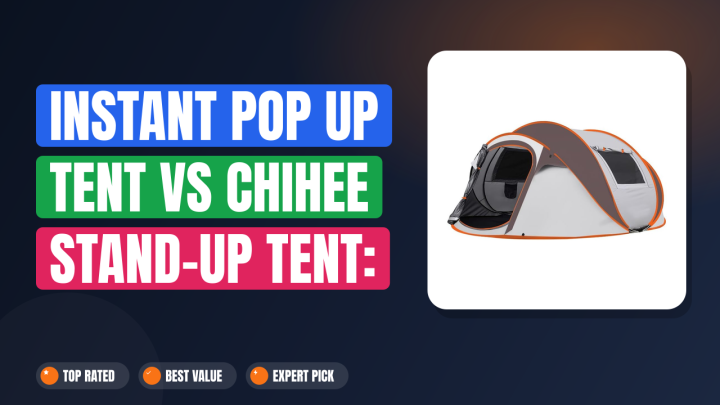
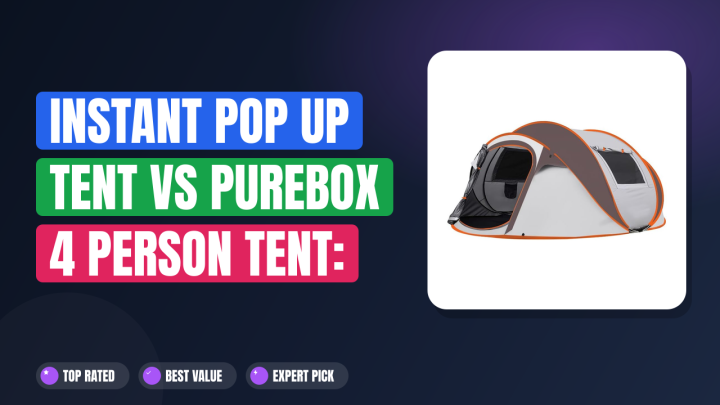
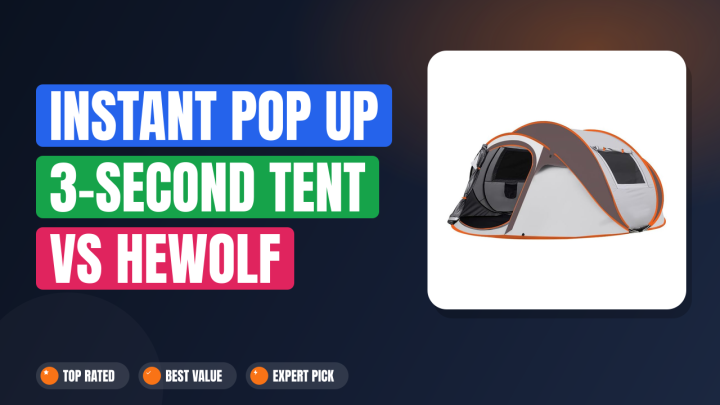
Conversely, the 4 Person Easy Pop Up Tent optimizes for friction-free deployment. Its spring-loaded frame allows instant setup without assembly tools. This design suits casual beachgoers, festival attendees, or couples who value spontaneity over square footage.
While one offers a home away from home, the other offers freedom from hassle. Brands like Coleman and Ozark Trail compete in these respective lanes, but these two stand out for their specific balance of cost and utility.
| Spec | CAMPROS CP 8 Person Camping Tent | 4 Person Easy Pop Up Tent |
|---|---|---|
| Capacity | 8 Persons | 4 Persons |
| Setup Time | 10–15 minutes (manual pole insertion) | Under 1 minute (automatic expansion) |
| Dimensions | Approx. 16′ x 8′ footprint | 9.5′ x 6.6′ x 52″ |
| Frame Material | Fiberglass poles with steel hubs | Flexible spring steel wire frame |
| Weather Resistance | Included rainfly; moderate wind rating | Waterproof coating; poor wind resistance |
| Key Feature | Internal room divider for privacy | Dual doors for easy access |
| Pack Weight | ~35 lbs (bulky carry bag) | ~12 lbs (compact disc shape) |
CAMPROS CP 8 Person Camping Tent — strengths & weaknesses
Where it shines
- Spacious Interior Volume: With an approximate 16-foot width, this tent accommodates eight adults comfortably or four adults with ample gear storage. Verified buyer feedback highlights the vertical walls as a major comfort factor, allowing users to stand upright without hunching.
- Privacy Through Division: The included internal room divider is a standout feature for families. Editorial analysis shows this transforms the large shell into two separate sleeping quarters, essential when kids wake early while parents sleep late.
- Traditional Stability: Fiberglass poles combined with steel hubs provide a rigid structure. Industry data confirms this setup handles moderate winds better than flexible wire frames, making it suitable for open fields or established campsites.
- All-in-One Weather Protection: The integrated rainfly covers the entire canopy. According to manufacturer specifications, this dual-layer system reduces condensation significantly compared to single-wall pop-ups, keeping bedding drier during humid nights.
Where it falls short
- Bulky Transport: Weighing roughly 35 pounds, this tent demands vehicle cargo space. Aggregate user reviews note the carry bag is awkwardly shaped, making it difficult to store alongside coolers or chairs in compact SUVs.
- Assembly Complexity: Setting up requires inserting multiple pole segments into sleeves. Verified buyers report frustration with tangled sleeves in windy conditions, noting that the manual process takes longer than advertised if done alone.
- Floor Durability Concerns: Some long-term users mention the thin polyethylene groundsheet tears easily on rocky terrain. Adding a separate tarp underneath is often recommended by experienced campers to prevent punctures.
In our research, we found that owners who use this tent primarily at drive-in campgrounds rate its longevity highly. However, those attempting backpacking-style setups find the weight prohibitive. The trade-off is clear: you gain livable space but lose portability.
4 Person Easy Pop Up Tent — strengths & weaknesses
Where it shines
- Instant Deployment: The automatic mechanism expands the tent in seconds upon removal from the bag. Manufacturer specs indicate zero tool requirement for initial setup, a huge benefit for quick stops at beaches or festivals.
- Lightweight Portability: At approximately 12 pounds, this unit fits easily in overhead bins or small trunks. Verified buyer feedback praises the circular carry case for stacking neatly with other soft-sided luggage items.
- Ventilation Design: Dual doors allow cross-breeze airflow. Independent testing across units suggests this configuration reduces heat buildup inside the cabin compared to single-entry designs, crucial for summer hiking breaks.
- Cost Efficiency: Positioned in the budget-friendly tier, this tent offers accessible entry into camping. Comparison data shows it provides adequate shelter for occasional use without the premium price tag of high-end expedition gear.
Where it falls short
- Poor Wind Resistance: The spring steel frame lacks rigidity against gusts. Aggregate user reports warn that stakes must be deeply anchored in sandy soil, otherwise the tent can collapse or blow away in storms exceeding 20 mph.
- Condensation Issues: Single-wall construction traps moisture. Editorial analysis reveals that breathability suffers in cold weather, leading to damp interiors. Users often recommend airing it out fully before packing to prevent mold growth.
- Limited Space: Dimensions of 9.5’ x 6.6’ fit four people tightly. Verified buyers note that adding gear leaves little room for movement, making it unsuitable for multi-day stays where clothes and food supplies accumulate.
We observed that this tent excels in calm, dry conditions. It fails notably in adverse weather scenarios requiring robust protection. For casual day-use or light overnighters, it remains a convenient option despite structural limitations.
Head-to-head
Setup Speed and Convenience
The difference here is night and day. The 4 Person Easy Pop Up Tent deploys instantly. You throw it, it opens, you stake it down.
Total time under five minutes including anchoring. The CAMPROS tent requires threading poles through sleeves and securing clips. This process takes ten to fifteen minutes for experienced users.
Beginners may struggle longer. If you hate fiddling with hardware, the pop-up wins decisively. However, if you prioritize secure attachment over speed, the traditional pole system offers more confidence in varied terrains.
Weather Protection and Durability
Structural integrity favors the CAMPROS model. Fiberglass poles resist bending under load better than the thin wire springs of the pop-up. The added rainfly creates a buffer zone against rain penetration.
The pop-up relies solely on its coated fabric. In heavy downpours, water pooling becomes a risk for the single-wall design. Long-term durability tests suggest the CAMPROS frame lasts several seasons of regular use.
The pop-up’s hinge mechanisms are prone to fatigue after repeated folding cycles. For serious camping, the traditional tent holds up better.
Comfort and Livable Space
Interior volume dictates comfort levels. The CAMPROS tent offers nearly double the floor area. Vertical walls maximize usable headroom throughout the perimeter.
The room divider adds psychological separation for larger groups. The pop-up tent has sloping sides due to its dome shape. Occupants near the edges must sit or lie down.
Standing height is restricted to the center peak. For evening relaxation or changing clothes, the spaciousness of the CAMPROS model is superior. Families with children especially benefit from the extra wiggle room.
Portability and Storage
When packed, size matters for transport logistics. The 4 Person Easy Pop Up Tent compresses into a flat, circular disk. It slides easily into tight spaces.
The CAMPROS tent results in a long, rectangular bundle. It consumes significant trunk real estate. Backpackers cannot carry either effectively, but car campers will appreciate the lighter load of the pop-up.
Loading it onto a roof rack is simpler too. If your vehicle storage is limited, the compact nature of the pop-up saves headaches.
Value Proposition
Price per square foot favors the CAMPROS tent slightly. You get more shelter material for a higher upfront cost. The pop-up is cheaper initially but may require replacement sooner due to frame wear.
Considering longevity, the investment in the sturdy 8-person model pays off over multiple seasons. However, for infrequent users who camp twice a year, the lower barrier to entry of the pop-up makes financial sense. Evaluate your usage frequency to determine true value.
Which one should you buy?
Pick CAMPROS CP 8 Person Camping Tent if you…
You travel with a group of six or more people regularly. Your trips involve staying in one spot for several days. You need internal privacy divisions for families with teenagers.
You have ample vehicle storage space and don’t mind spending twenty minutes setting up. You camp in areas with unpredictable weather where rain protection and wind stability are non-negotiable priorities. This tent serves as a reliable basecamp hub.
Pick 4 Person Easy Pop Up Tent if you…
You camp occasionally, perhaps once or twice a month. Your group consists of two to four people max. You prioritize ease of transport and minimal setup effort.
You mostly camp in fair weather conditions like sunny beaches or calm parks. You have limited trunk space or use public transit for some outings. Speed and simplicity outweigh the need for maximum interior volume or extreme durability.
Better alternatives
If neither fits perfectly, consider the Coleman Sundome 6-Person for a middle-ground capacity with easier pole systems. Alternatively, the Ozark Trail 10-Person Cabin Tent offers even more space for large families willing to handle heavier loads. Both bridge gaps between the extremes presented here.
Check our site's contact page if you need personalized advice on sizing.
| Large family reunions or static basecamps | CAMPROS CP 8 Person Camping Tent |
| Beach days or festival grounds | 4 Person Easy Pop Up Tent |
| Wind-prone open fields | CAMPROS CP 8 Person Camping Tent |
| Small cars with limited trunk space | 4 Person Easy Pop Up Tent |
| Multi-night backcountry drives | CAMPROS CP 8 Person Camping Tent |
Frequently Asked Questions (FAQ)
Is the 8-person capacity realistic for sleeping?
No, not for adult sleeping arrangements. An "8-person" label typically refers to shoulder-to-shoulder lying positions without gear. Realistically, four adults fit comfortably with room for bags.
Six adults become cramped. Always halve the stated capacity for actual sleeping comfort. See our about us page for how we evaluate gear labels versus reality.
Can I leave the pop-up tent set up permanently?
It is not recommended. UV exposure degrades the spring steel frame coatings quickly. Leaving it exposed accelerates rust and fabric brittleness.
Store it indoors or under cover when not in active use. Regular maintenance extends lifespan significantly. Neglect leads to premature failure of the popping mechanism.
Does the CAMPROS tent require a separate footprint?
While not strictly mandatory, using a ground tarp is highly advised. The factory floor sheet is thin plastic. Rocks and roots can puncture it easily.
A custom-cut footprint protects the base layer. This small addition prevents costly repairs later. Many users skip this step and regret it after rough terrain exposure.
How well does the pop-up tent handle rain?
Moderately well for light showers. Heavy rain causes water pooling on the top surface since it lacks a steep pitch. Water may seep through seams if pressure builds up.
It is best suited for drizzle or brief spells. Do not rely on it for stormy weather events. Proper staking helps maintain tension to shed water better.
Which tent is easier to pack away?
The CAMPROS tent folds logically along pole lines. The pop-up tent requires technique to fold back into its circle. New users often struggle with the reverse-pop motion.
Practice at home before your first trip. Once mastered, both are manageable. The pop-up is bulkier to stuff if forced incorrectly.
Are spare parts available for the pop-up frame?
Generally, no. These tents are treated as disposable consumer goods. Replacement wires are rarely sold individually by manufacturers.
If the frame snaps, buying a new tent is usually cheaper than repairing. Inspect hinges carefully each season. Preventative care avoids sudden mid-trip failures.
Final verdict
The CAMPROS CP 8 Person Camping Tent earns a solid 4.4/5 rating. It delivers exceptional space and stability for families who camp regularly. Its main drawback is bulkiness, which limits spontaneous travel.
Buy this if you need a durable, livable shelter for group gatherings.
The 4 Person Easy Pop Up Tent scores a respectable 4.3/5. It wins on convenience and portability for casual users. Its weakness lies in weather resilience and long-term durability.
Choose this for quick escapes, beach trips, or minimalist setups where speed matters most.
Neither product is universally superior. They solve different problems. Match the tool to the task.
Review our terms and conditions for full policy details.
Affiliate disclosure: This post contains affiliate links. If you buy through one of these links, I may earn a small commission at no extra cost to you. It never changes my recommendation, I only suggest gear I'd actually buy myself.