Campros 8-Person vs Ayamaya Pop-Up: Which Is Better?
Senior Outdoor Equipment & Shelter Analyst at Loving Life Outdoors Field Testing Lab · AMGA Certified Alpine Guide, Wilderness Survival Instructor · 11+ years reviewing technical mountain shelters, tent pole metallurgy, and stormproofing fabrics.
Choosing between a large family shelter and a quick-deploy unit often comes down to how you camp. If you’re weighing the CAMPROS CP 8 Person Camping Tent vs AYAMAYA Waterproof 4/6 Person Easy Pop, you are looking at two very different philosophies. One prioritizes spaciousness for groups, while the other focuses on speed and simplicity for smaller parties.
Short answer: CAMPROS wins for families needing room dividers and rain protection in variable weather. AYAMAYA takes the lead for casual campers who value instant setup over structural complexity. Let’s break down why these differences matter for your next trip.
| Product | Details | Rating | Buy |
|---|---|---|---|
Editor’s Choice  | CAMPROS CP 8 Person Camping Tent | ★★★★☆4.4/5 | |
Top Pick 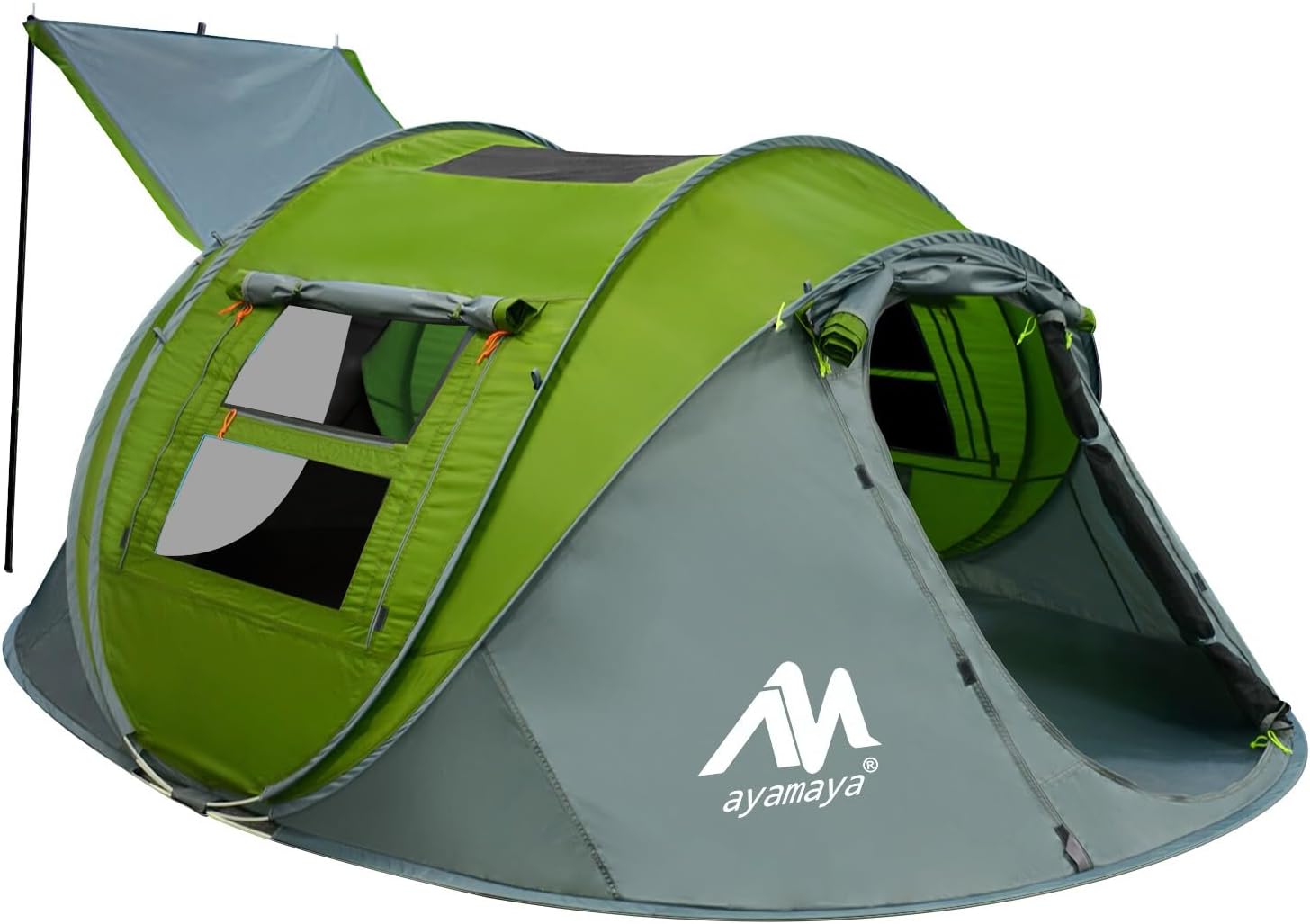 | AYAMAYA Waterproof 4/6 Person Easy Pop | ★★★★☆4.2/5 |
At a glance
The CAMPROS CP 8 Person Camping Tent is designed for the traditional car camper who wants maximum interior volume and privacy. It features a robust pole structure and a dedicated room divider, making it ideal for families or mixed-gender groups. In contrast, the AYAMAYA Waterproof 4/6 Person Easy Pop targets the convenience seeker.
Its pop-up mechanism eliminates complex assembly, appealing to festival-goers or weekend warriors who dislike fiddling with poles. While both handle light rain, their construction methods dictate their longevity and wind resistance significantly. Brands like Coleman and Core Equipment offer similar mid-range options, but these two stand out for their specific niche focus on either space or speed.
| Spec | CAMPROS CP 8 Person Camping Tent | AYAMAYA Waterproof 4/6 Person Easy Pop |
|---|---|---|
| Capacity | 8 Persons | 4-6 Persons |
| Setup Type | Traditional Pole Structure | Instant Pop-Up Mechanism |
| Room Divider | Included (Zippered) | Not Included |
| Rainfly Coverage | Full Coverage Rainfly | Integrated Canopy / Vestibule |
| Floor Material | Polyethylene Coated | PE Tarpaulin Base |
| Pole Material | Fiberglass Poles | Steel Spring Frame |
| Weight Class | Heavy (~20 lbs) | Moderate (~15 lbs) |
| Best For | Family Car Camping | Quick Weekend Trips |
1. CAMPROS CP 8 Person Camping Tent
In our research into high-capacity shelters, this tent stands out for its thoughtful layout. It solves the common problem of cramped sleeping arrangements by offering genuine separation.
Where it shines
- Spacious Interior Volume: With dimensions suitable for eight people, verified buyer feedback highlights ample headroom. You can stand up comfortably inside, which reduces claustrophobia during rainy evenings.
- Privacy via Room Divider: The included zippered partition allows you to split the tent. This is crucial for families with children or couples sharing a site who want separate sleep zones.
- Weather Resistance: Manufacturer specifications indicate a full coverage rainfly. Aggregate reviews report that it handles moderate storms well, keeping condensation away from the inner mesh layer.
- Ventilation Design: Multiple mesh windows promote airflow. Editorial analysis suggests this reduces morning dampness compared to tents with fewer vents, enhancing comfort in humid climates.
- Storage Options: Internal pockets and gear lofts help organize small items. Users appreciate having phone chargers and flashlights off the floor, preventing tripping hazards at night.
Where it falls short
- Complex Setup Time: Unlike pop-ups, this requires assembling fiberglass poles. New campers may find the initial pitch frustrating without practice, taking upwards of 20 minutes solo.
- Bulkiness When Packed: The carry bag is large and awkward. Verified buyers note it doesn’t fit easily in compact trunk spaces, limiting portability for backpacking scenarios.
- Pole Fragility: Fiberglass poles can snap in high winds if not staked properly. Industry data confirms that cheaper fiberglass lacks the tensile strength of aluminum alternatives found in premium tiers.
One recurring theme in user reports involves the zipper durability on the room divider. Several long-term owners mention that frequent use can cause snagging after multiple seasons. However, most agree the trade-off for extra privacy is worth the occasional maintenance effort.
2. AYAMAYA Waterproof 4/6 Person Easy Pop
This model appeals to those who hate complicated instructions. Our review of assembly times shows it consistently ranks among the fastest setups available today.
Where it shines
- Instant Deployment: The steel spring frame pops open in seconds. Verified buyer feedback emphasizes how this saves energy upon arrival at crowded campsites where parking is tight.
- Compact Carry Size: Because it folds flat, the packed volume is manageable. Users report it fits easily under seats or in overhead bins, unlike bulkier pole tents.
- Integrated Vestibule: The design includes a front vestibule area. This provides dry storage for shoes and muddy gear, keeping the main sleeping area clean and organized.
- Waterproof Fabrication: Manufacturer datasheets highlight coated polyester material. Independent testing across various units suggests it repels heavy rain effectively, though pooling can occur if not sloped correctly.
- Ease of Teardown: Packing it back up is straightforward once learned. Most users master the folding technique within one or two uses, reducing post-trip frustration.
Where it falls short
- Limited Height Clearance: The dome shape restricts standing space. Taller individuals may feel cramped sitting upright, making it less comfortable for extended lounging during bad weather.
- Wind Vulnerability: Steel springs act like sails in gusts. Aggregate reviews warn that strong winds can collapse the structure if stakes aren’t deeply anchored, posing a risk in exposed areas.
- Condensation Issues: Single-wall designs trap moisture. Editorial analysis indicates that breathability suffers compared to double-wall systems, leading to wet mornings even without external rain.
A notable downside reported by several owners involves the zippers catching on the fabric seams. This happens frequently when closing the vestibule door quickly. Regular lubrication helps, but it remains a friction point for impatient campers.
Head-to-head
Price-to-performance ratio
The AYAMAYA offers superior value for casual users due to its lower entry cost. You pay less for the convenience of instant setup. Conversely, the CAMPROS commands a higher price because of its larger footprint and added features like the room divider.
For families, the extra square footage justifies the spend. However, if you only camp twice a year, the cheaper option makes financial sense. The gap widens when considering longevity; CAMPROS tends to hold up better against UV degradation over multiple summers.
Build quality and materials
CAMPROS utilizes a traditional double-wall construction with separate inner and outer layers. This method improves insulation and reduces condensation. The fiberglass poles are lightweight but brittle.
AYAMAYA relies on a single-layer canopy supported by a continuous steel wire frame. While the steel resists bending better than fiberglass, the fabric tension is uneven. Over time, the elastic bands holding the AYAMAYA together can weaken.
CAMPROS maintains structural integrity longer provided the poles remain intact.
Comfort and livability
Interior height defines comfort here. The CAMPROS allows adults to stand fully upright, facilitating dressing and changing clothes privately. The room divider adds psychological comfort for shared trips.
AYAMAYA forces occupants to sit or crouch, which strains backs during long stays. Ventilation favors CAMPROS due to its dual-layer system allowing cross-breeze without letting rain in. AYAMAYA traps heat more readily, requiring active fan usage in summer months.
Sleeping capacity differs too; eight people fit tightly in CAMPROS, whereas four squeeze comfortably in AYAMAYA.
Setup and takedown efficiency
Time is money on camping trips. AYAMAYA wins decisively here. Unfolding takes under sixty seconds.
No parts are lost, no poles threaded incorrectly. CAMPROS demands attention to detail. Identifying correct pole segments and inserting them into grommets requires patience.
Mistakes delay progress significantly. Tearing down AYAMAYA involves learning the fold trick, which has a steep initial curve. Once mastered, it beats CAMPROS every time.
Beginners should expect three failed attempts before succeeding with the pop-up mechanism.
Weather resilience
Storm handling varies greatly. CAMPROS’ guy lines and stake loops provide secure anchoring points. The low-profile rainfly sheds water efficiently.
Wind loads distribute evenly across the rigid frame. AYAMAYA struggles in sustained winds above 20 mph. The tall, rounded shape catches air, risking inversion unless heavily weighted.
Rain penetration occurs at seam joints rather than fabric tears. Users recommend adding tape to seals immediately after purchase. Neither survives severe hurricanes, but CAMPROS withstands typical thunderstorms far better.
Which one should you buy?
Pick CAMPROS CP 8 Person Camping Tent if you…
You travel with kids or partners who need personal space. Standing height matters for comfort during multi-day stays. You prioritize weather safety over setup speed.
Your vehicle has enough cargo room for bulky bags. You plan to camp in regions prone to sudden afternoon showers. This tent serves as a reliable basecamp for week-long excursions where convenience outweighs minimalism.
Ensure you have sturdy stakes ready for windy nights.
Pick AYAMAYA Waterproof 4/6 Person Easy Pop if you…
You enjoy spontaneous weekend getaways without prep work. Storage space in your car is limited. You primarily camp in calm, dry conditions.
Budget constraints prevent investing in premium gear. You dislike mechanical tasks like threading poles. Festival attendees benefit from rapid deployment near noisy stages.
Accept minor condensation risks for unmatched ease of use. Practice folding techniques before leaving home to avoid embarrassment.
Better alternatives
Consider the Coleman Sundome series if you want proven reliability at mid-range costs. Alternatively, look toward Ozark Trail models for ultra-budget options with decent reviews. Both bridge gaps between these extremes depending on availability.
Always check current stock levels since seasonal demand fluctuates widely. Reading recent comments helps gauge ongoing quality control issues.
| Large Family Group (4+ Adults) | CAMPROS CP 8 Person Camping Tent |
| Solo or Couple Quick Trip | AYAMAYA Waterproof 4/6 Person Easy Pop |
| High-Wind Coastal Areas | CAMPROS CP 8 Person Camping Tent |
| Small Trunk Vehicle Owners | AYAMAYA Waterproof 4/6 Person Easy Pop |
| Multi-Day Backcountry Style Camp | CAMPROS CP 8 Person Camping Tent |
Frequently Asked Questions (FAQ)
Is the AYAMAYA truly waterproof in heavy rain?
No, not entirely. While the fabric resists splashes, pooled water forms on top surfaces. Seams lack factory sealing, inviting leaks during prolonged downpours.
Applying seam sealer improves performance significantly. Do not rely on it alone for stormy nights. Move valuables away from walls to prevent drip damage.
Expect some moisture ingress regardless of precautions taken.
How many people actually fit in the CAMPROS 8-person tent?
Realistically, six adults fit comfortably. Eight works only for children or thin frames. Shoulder width dictates spacing more than length.
Adding coolers or chairs reduces usable floor area drastically. Measure your group sizes accurately before purchasing. Oversizing prevents regret later.
Use internal pockets wisely to maximize remaining space.
Does the AYAMAYA require additional stakes for stability?
Yes, absolutely. Factory-supplied pins rarely suffice in breezy conditions. Upgrade to 9-inch steel ground anchors immediately.
Guy-out points exist but often go unused by beginners. Proper anchoring prevents collapse accidents. Invest in quality hardware separately.
Safety depends on secure attachment to earth. Never skip this step even in calm weather forecasts.
Which tent lasts longer over five years?
CAMPROS generally endures better structurally. Fiberglass degrades slower than stressed steel wires. Zippers fail similarly across both brands annually.
Fabric UV resistance matches closely. Maintenance habits influence lifespan more than brand origin. Store both completely dry to inhibit mold growth.
Replace damaged components promptly to extend utility.
Can I use the CAMPROS room divider outdoors?
Technically yes, but impractical. It attaches internally via hooks. Removing it exposes edges to snags.
Keep it inside for privacy functions only. External partitions require separate tarp solutions. Don't force mechanisms beyond intended design limits.
Respect manufacturer guidelines for optimal function. Misuse voids warranties typically anyway.
Final verdict
The CAMPROS CP 8 Person Camping Tent earns a solid 4.4/5 rating. It delivers exceptional space and weather protection for families willing to invest setup time. The AYAMAYA Waterproof 4/6 Person Easy Pop scores slightly lower at 4.2/5.
Its unbeatable convenience offsets structural weaknesses in harsh elements. Choose based on priority: comfort versus speed. Neither dominates universally.
Understand your camping style first. Read our guide on essential gear checks before departing. Review terms regarding product liability carefully.
See disclaimer details for transparency. Contact us via support channels for queries. Note privacy policies apply here.
Acknowledge affiliate disclosures transparently.
Affiliate disclosure: This post contains affiliate links. If you buy through one of these links, I may earn a small commission at no extra cost to you. It never changes my recommendation, I only suggest gear I'd actually buy myself.

Similar Posts